
Last updated September 23, 2026
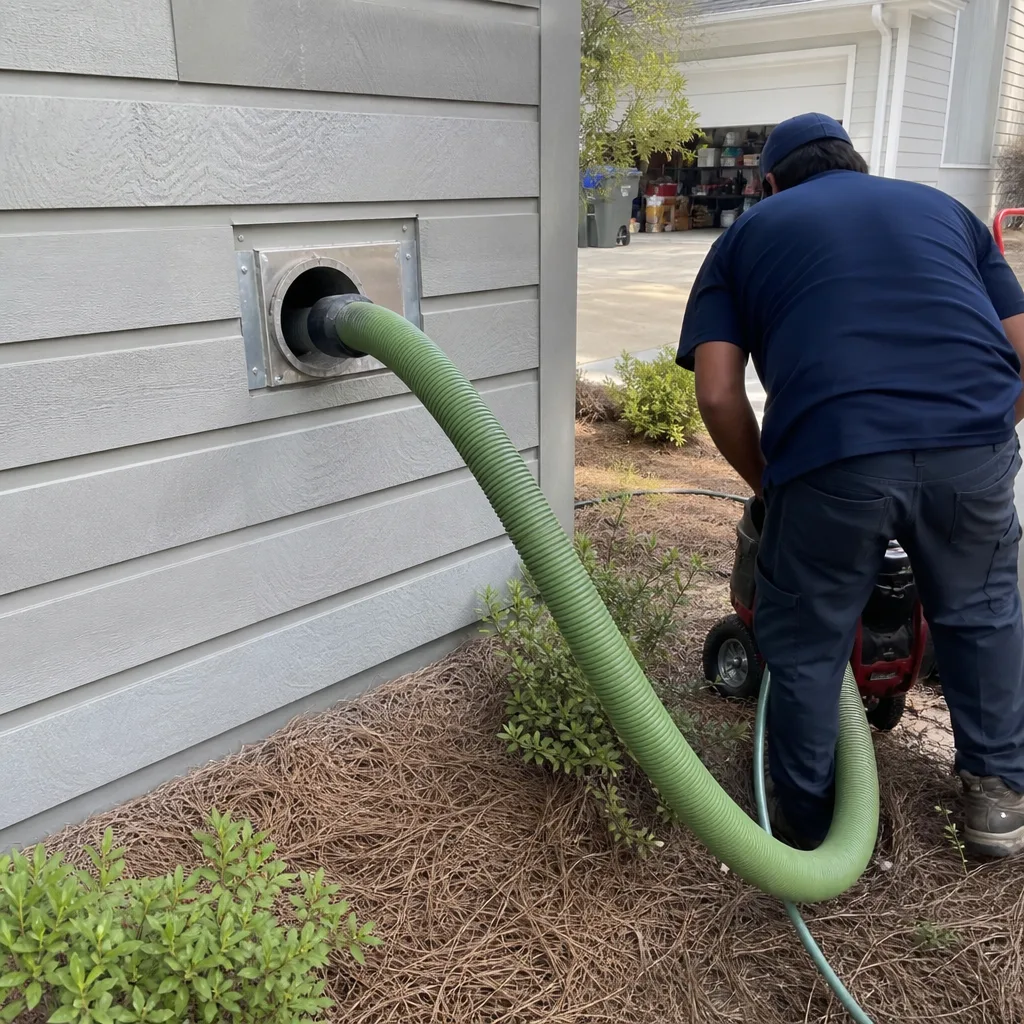
Whole-system duct and dryer vent check with before-and-after photos - you see exactly what came out of your vents
That "$99 whole-house special" is a bait ad - the real number appears once they are in your hallway, or the "clean" is a shop-vac at the register. We photograph the inside of your ducts before and after instead.
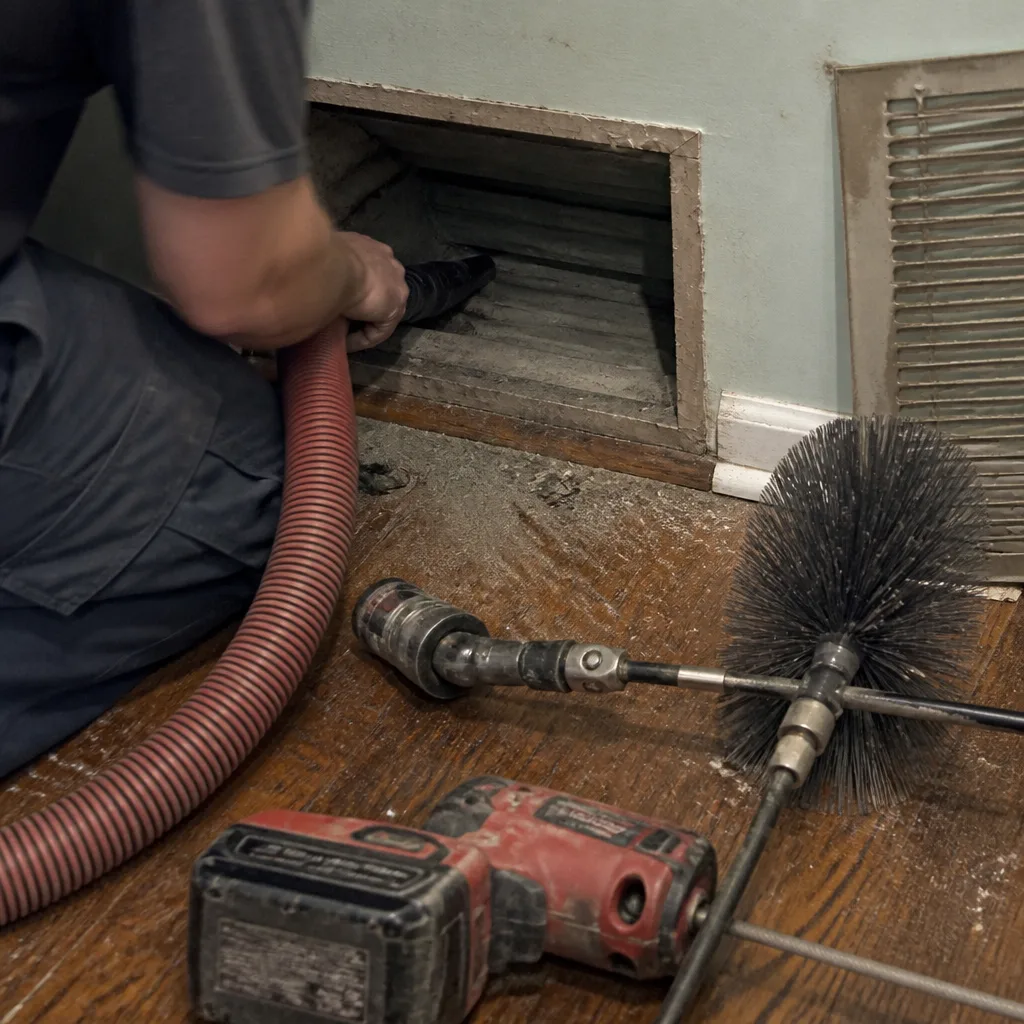 Before
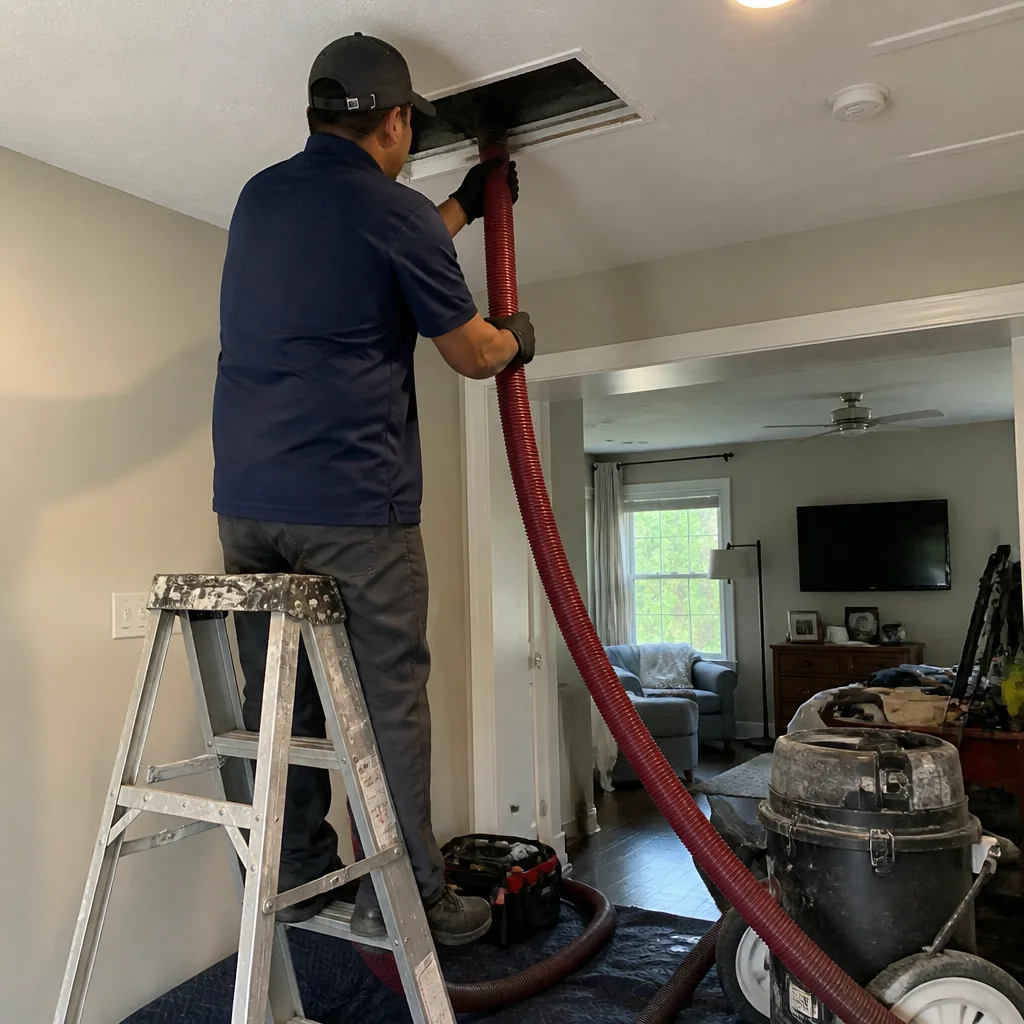 After
After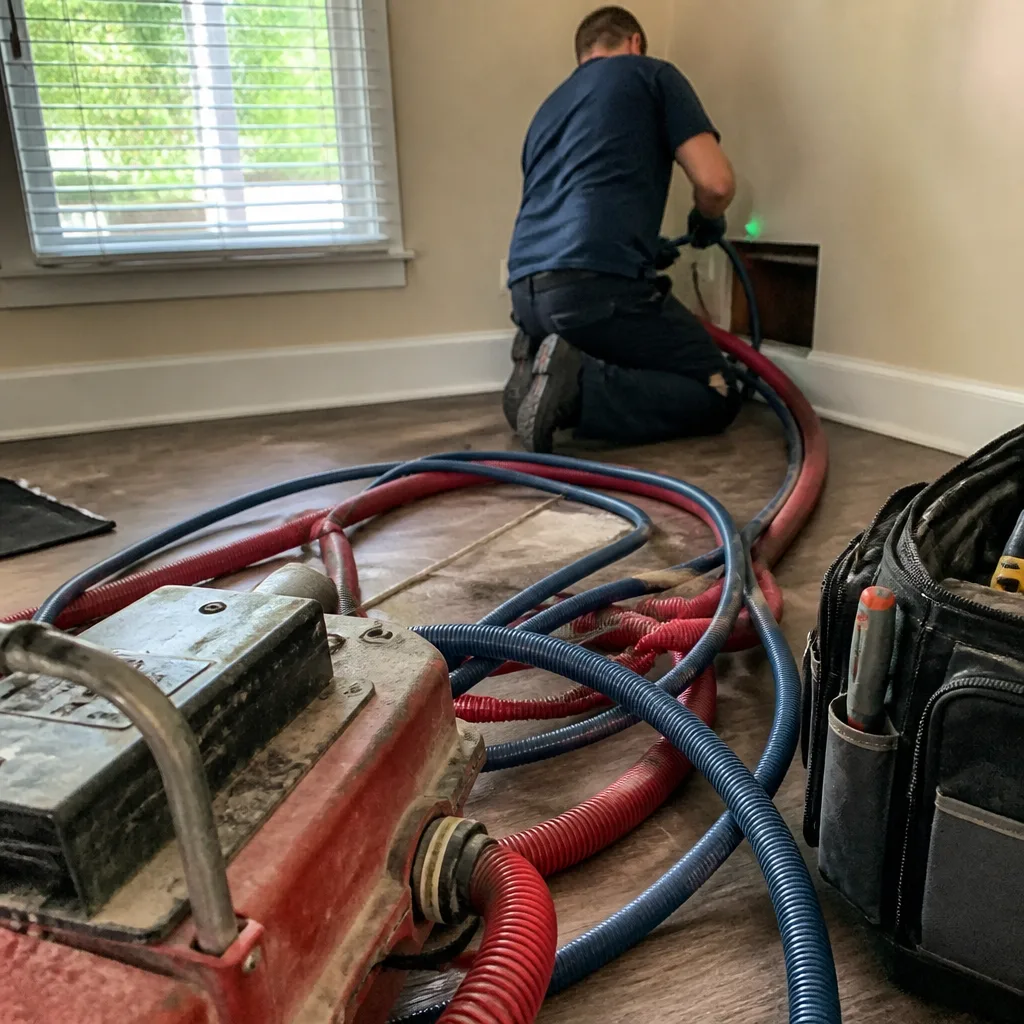 Before
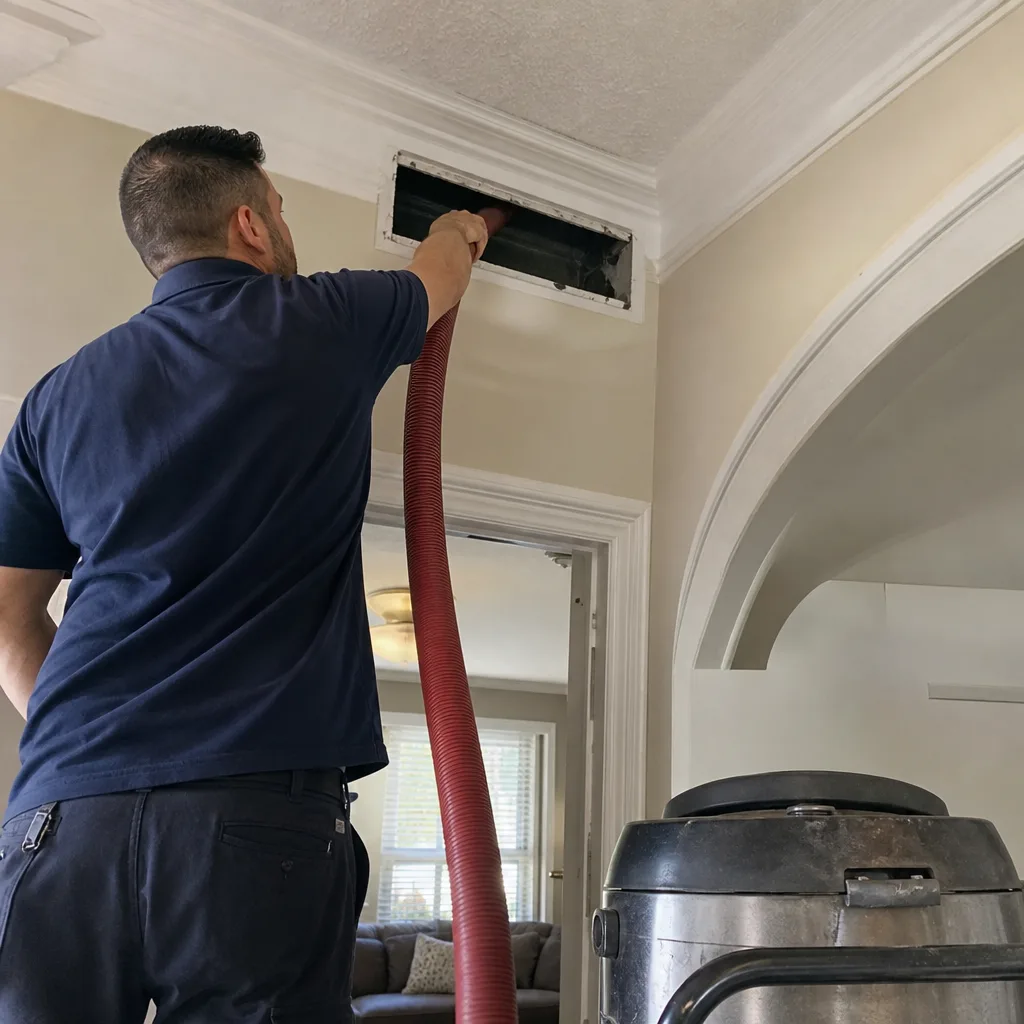 After
After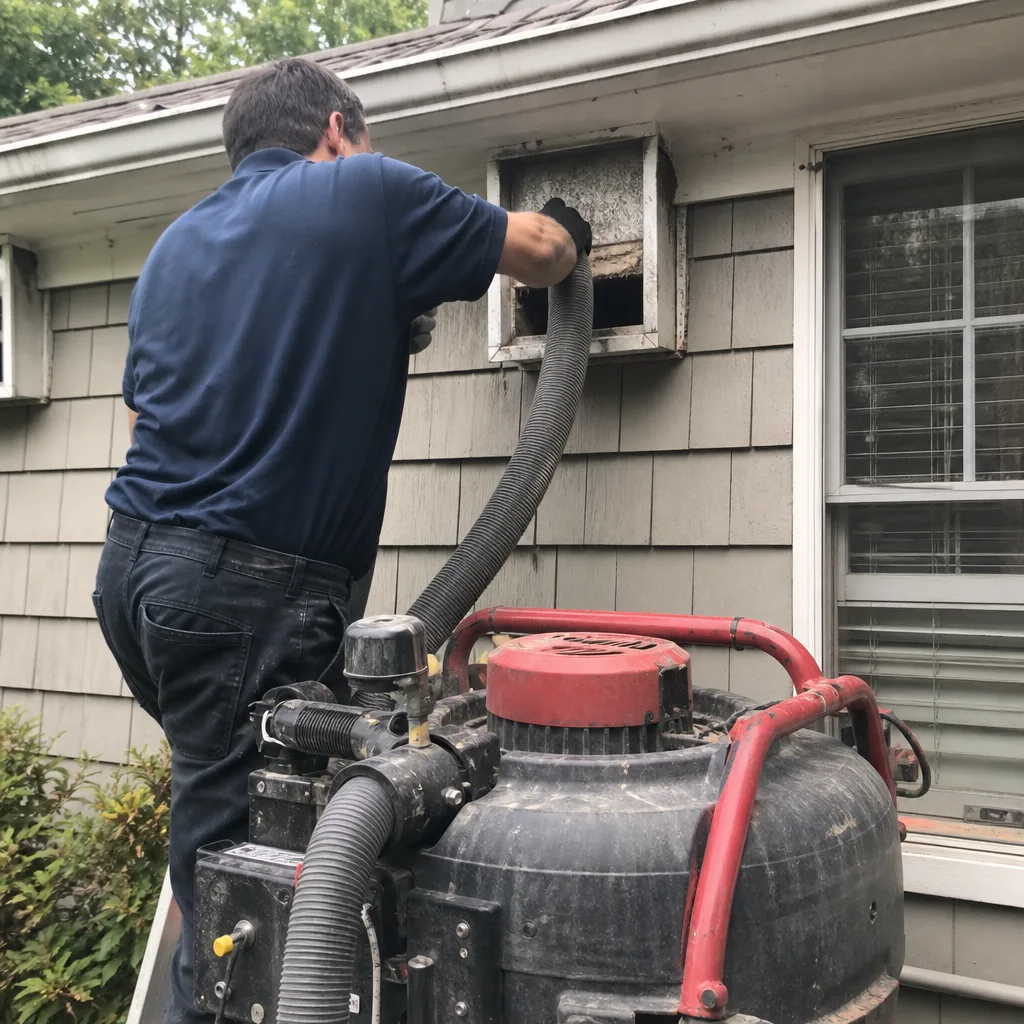 Before
 After
AfterAir Duct Cleaning Permits, Codes & Inspections in GA: What You Need to Know
Most Sandy Springs homeowners assume air duct cleaning is either fully regulated or completely unregulated. Neither is true. Georgia treats duct cleaning as an unlicensed service, but the moment a technician repairs, replaces, or modifies any part of your duct system, state mechanical codes apply and that work may require a licensed contractor and inspection. We’ve arrived at jobs in Sandy Springs neighborhoods like Riverside and Dunwoody Panhandle where a previous “cleaning” visit included duct reattachment, sealing, or register modification performed by unlicensed workers with no permits pulled. Our Complete Guide to Air Duct Cleaning in Sandy Springs maps exactly where the regulatory line falls, what questions to ask before anyone touches your system, and how to protect yourself from work that looks helpful but creates liability.
Quick Answer
Air duct cleaning itself requires no permit or license in Georgia. However, any repair, replacement, or modification of ductwork, including reconnecting disconnected sections or altering register locations, falls under the Georgia State Minimum Standard Mechanical Code and must be performed by a licensed contractor, with permits and inspections required in many jurisdictions including Sandy Springs and Fulton County. Always ask for written scope separation between cleaning and repair work.
Table of Contents
- Cleaning vs. Repair: Where Georgia Law Draws the Line
- Georgia’s State Minimum Standard Mechanical Code: What It Actually Covers
- Sandy Springs and Fulton County: Who Pulls What Permit
- Insurance and Home-Sale Disclosure Risks of Unpermitted Duct Work
- How to Protect Yourself: Written Scope Separation
- What Professional Duct Cleaning Should Actually Include
- Red Flags: When a “Cleaning” Quote Hides Mechanical Work
- Common Mistakes to Avoid
- When to Call a Professional
- Frequently Asked Questions
- The Bottom Line
BeforeAfterCleaning vs. Repair: Where Georgia Law Draws the Line
Georgia’s Division of Conditioned Air Contractors, part of the State Construction Industry Licensing Board, regulates who may perform mechanical work on HVAC and duct systems. But the statute does not mention duct cleaning at all. This creates a gap that many contractors exploit.
Cleaning activities (no license required):
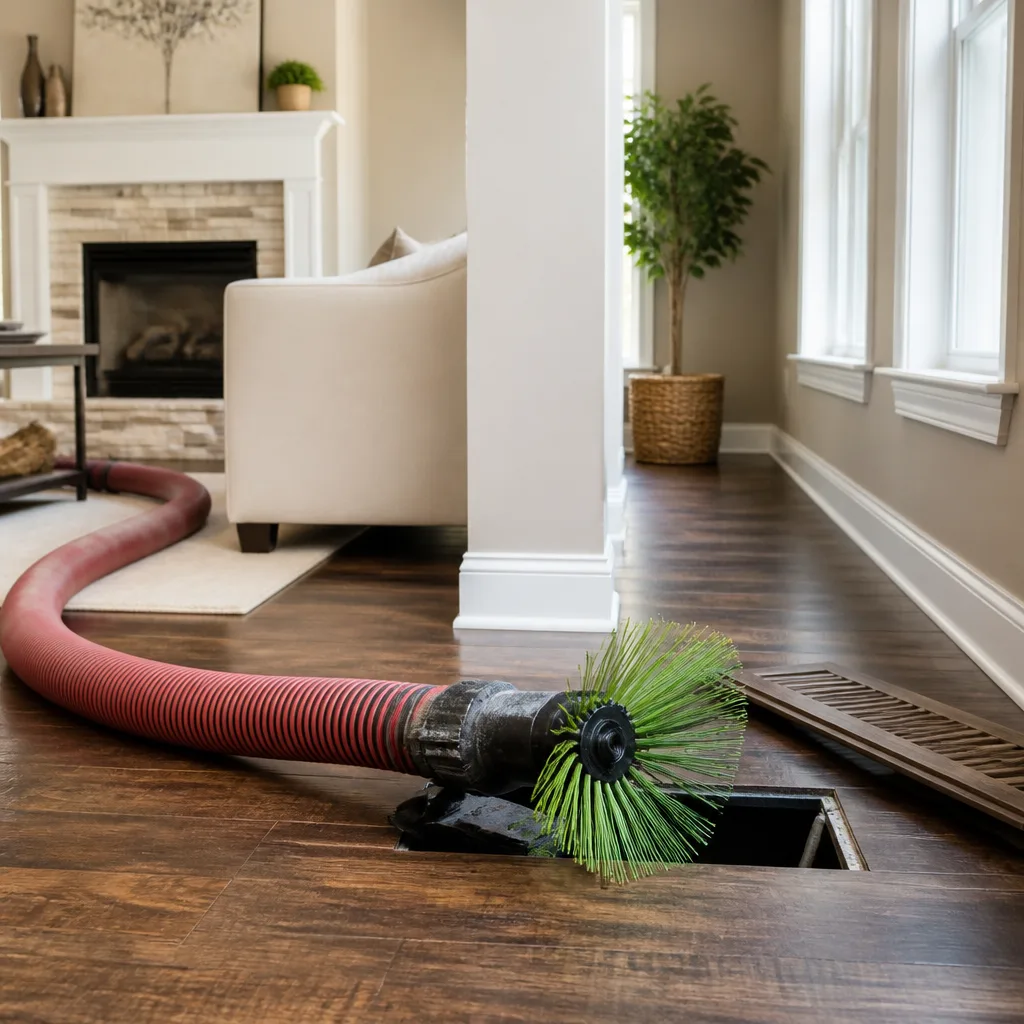
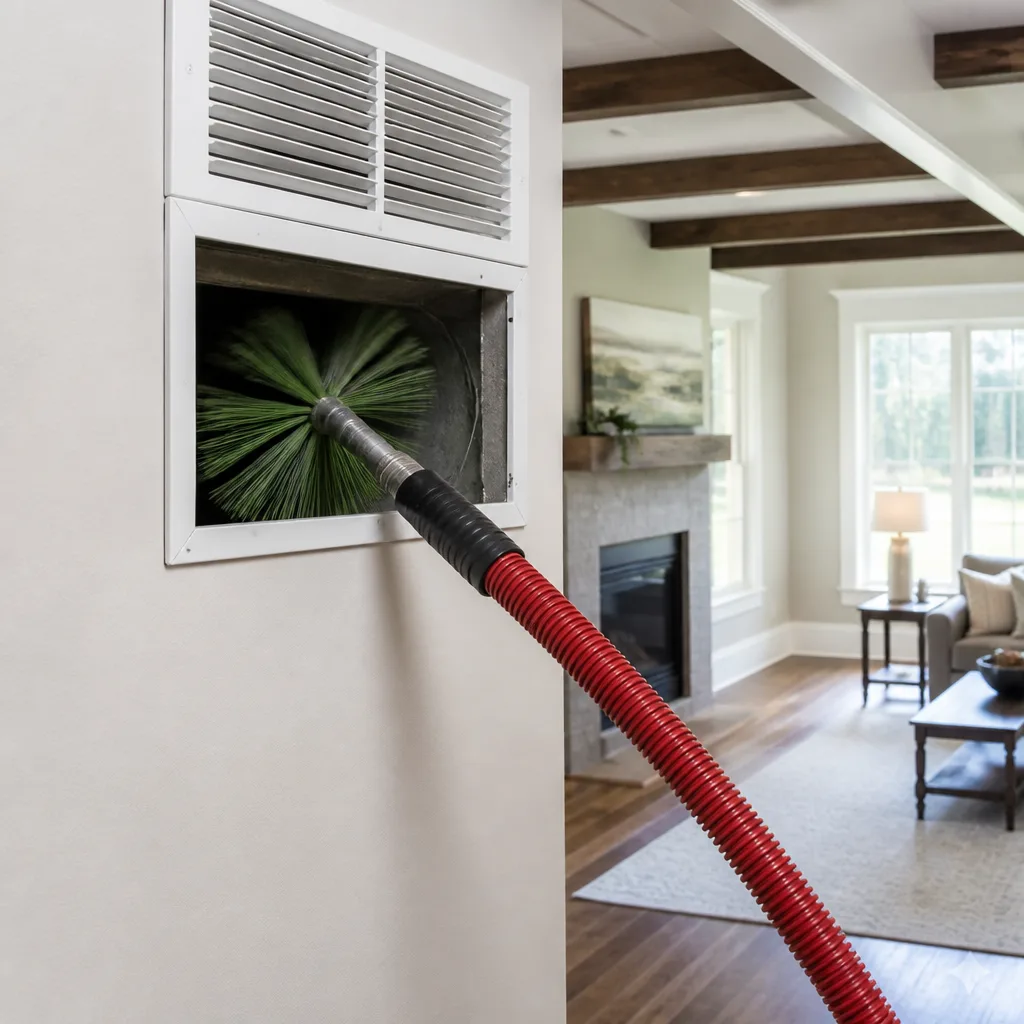
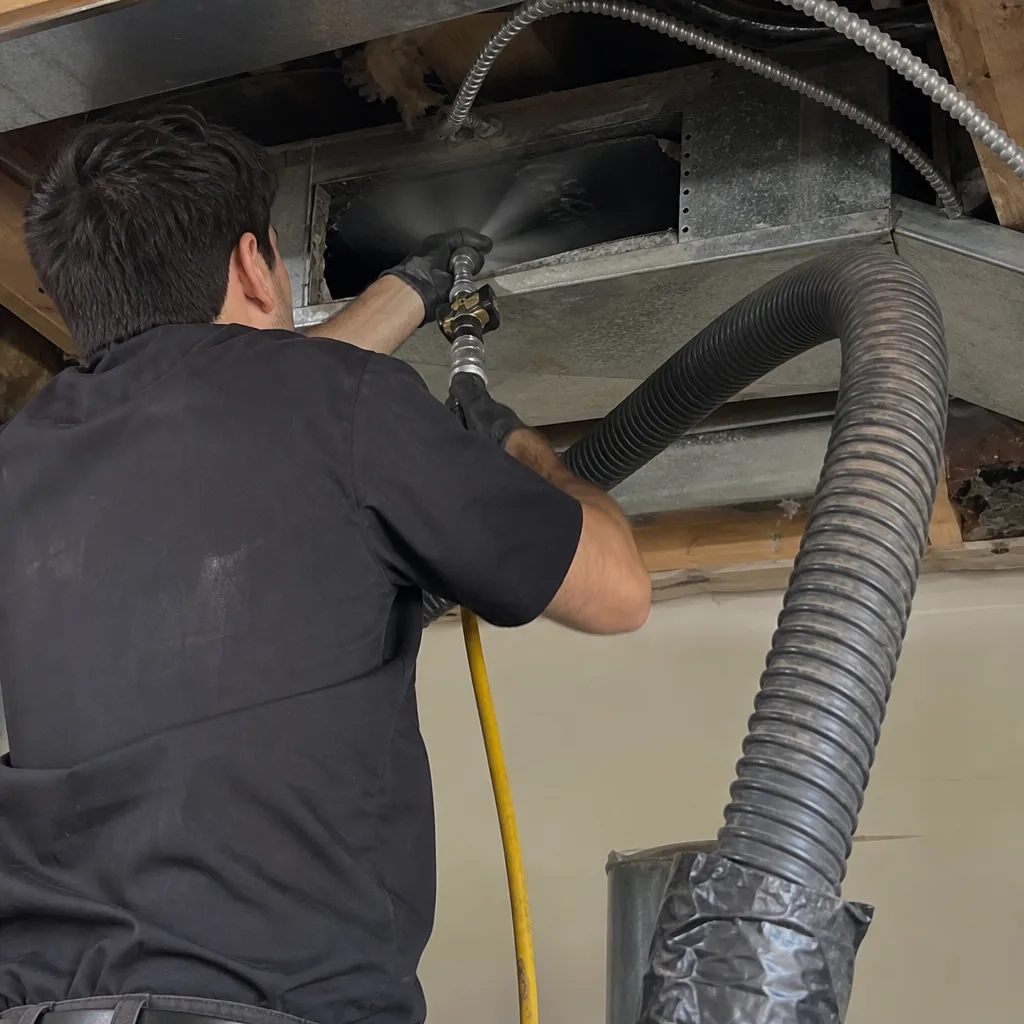
- Removing debris from existing duct runs using negative-pressure extraction or mechanical brushing
- Cleaning registers, grilles, and visible plenum surfaces without disassembly
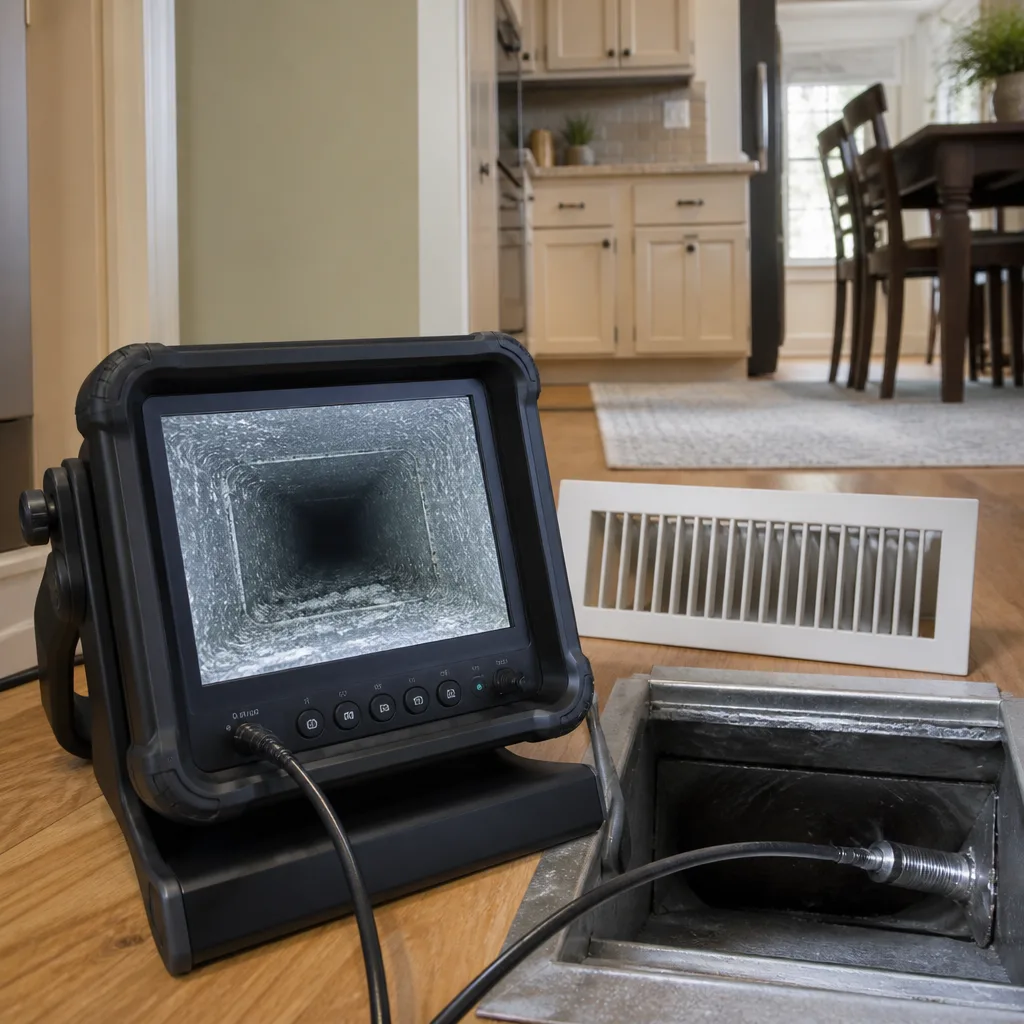
- Photographing interior conditions for documentation
- Applying EPA-registered sanitizers to existing duct surfaces (non-coating application)
Repair/modification activities (licensed contractor required):
- Reconnecting disconnected flex duct sections, even simple re-clamping
- Sealing leaks with mastic or tape where the sealant constitutes “repair” rather than preparation for cleaning
- Replacing damaged duct sections, insulation, or supports
- Modifying register locations or adding/removing duct runs
- Installing access panels where none existed (in some jurisdictions)
In Sandy Springs, we regularly find disconnected flex duct in attics, especially in homes built between 2015 and 2020 where rapid construction schedules left sloppy connections. A technician who simply reconnects that duct during an air duct cleaning visit, without informing the homeowner that this constitutes regulated mechanical work, is operating outside legal scope. Worse, if that reconnection fails later and causes moisture damage or mold, the homeowner has no recourse against an unlicensed provider.
The distinction matters for your protection. Ask any contractor, in writing: “Will this visit include any repair, reconnection, or modification of ductwork?” If the answer is yes, verify they hold a Georgia Conditioned Air Contractor license and will pull required permits.
Georgia’s State Minimum Standard Mechanical Code: What It Actually Covers
Georgia adopts the International Mechanical Code (IMC) through the State Minimum Standard Mechanical Code, last updated through amendments that apply statewide unless a local jurisdiction enacts stricter standards. Fulton County, which includes Sandy Springs, maintains its own amendments and enforcement procedures.
The IMC Chapter 6 governs duct construction, installation, and modification. Key provisions relevant to homeowners:
- Duct materials and sizing: Any replacement duct must meet IMC Table 603.4 material standards. Flex duct must be supported per Section 603.9, with maximum sag of 1/2 inch per foot. We see unsupported flex duct in Sandy Springs attics constantly, especially in townhome developments near Hammond Drive where space constraints led installers to cut corners.
- Sealing requirements: Ducts in unconditioned spaces must be sealed to Class A standards (Section 603.9.1). Mastic or approved tape must be applied at all joints. A “cleaning” contractor who applies mastic to leaking joints without a license may technically violate code if the work constitutes repair rather than incidental touch-up.
- Inspection triggers: New duct installation, duct replacement exceeding 50% of system length, or any modification affecting airflow design requires inspection. Some Fulton County inspectors interpret reconnection of previously disconnected duct as “modification” requiring permit and inspection, particularly if the disconnection was intentional (abandoned run) rather than accidental.
- Condensate and drainage: If duct modification affects condensate drainage paths, additional plumbing inspection may be required.
The Georgia Secretary of State’s office maintains a license lookup for Conditioned Air Contractors. We publish our license number on every proposal under Haven Standard Clause 2: Documented Credentials, so customers can verify status independently.
One detail competitors rarely mention: Georgia’s “maintenance” exemption allows licensed contractors to perform routine maintenance without permit, but this exemption does not extend to unlicensed duct cleaning companies. The exemption is for licensed contractors only, performing work within their scope.
Sandy Springs and Fulton County: Who Pulls What Permit
Sandy Springs operates its own building department for permits and inspections, though some functions overlap with Fulton County depending on property location and work type. For duct-related work, the jurisdiction matters.
City of Sandy Springs Building Department:
- Issues mechanical permits for duct repair, replacement, and modification within city limits
- Requires licensed Conditioned Air Contractor to pull permit (homeowner cannot pull their own mechanical permit)
- Inspections typically scheduled within 2-3 business days of completion
- Permit fees based on project valuation; minimum fee applies for minor duct repairs
- Online permit lookup available for verification
Fulton County (unincorporated areas and some overlapping jurisdictions):
- Mechanical permits required for same scope of work
- Enforcement historically less consistent than Sandy Springs proper, creating gaps where unpermitted work goes unnoticed
- Home sales in unincorporated Fulton may trigger retroactive inspection requirements if disclosure reveals unpermitted mechanical work
Here’s where Sandy Springs homeowners specifically get caught: the city has aggressive code enforcement for home sales in certain neighborhoods, particularly newer developments where original builders are no longer active. We’ve serviced homes in the Pill Hill area and along Glenridge Drive where sellers faced last-minute inspection failures because previous “duct cleaning” visits-often missing the Air Duct Cleaning Warning Signs every Sandy Springs homeowner should know-included unpermitted register relocations or duct rerouting.
The climate factor matters too. Sandy Springs’ hot, humid summers mean duct leakage has immediate moisture consequences. A poorly reconnected flex duct in a vented attic can introduce enough humidity to trigger mold growth within a single cooling season. Fulton County inspectors know this and scrutinize attic ductwork more carefully than in drier Georgia regions.
If you’re uncertain whether your property falls under Sandy Springs city permits or Fulton County, check your tax bill or call the Sandy Springs Building Department directly. The address alone isn’t always definitive due to annexation history.
Insurance and Home-Sale Disclosure Risks of Unpermitted Duct Work
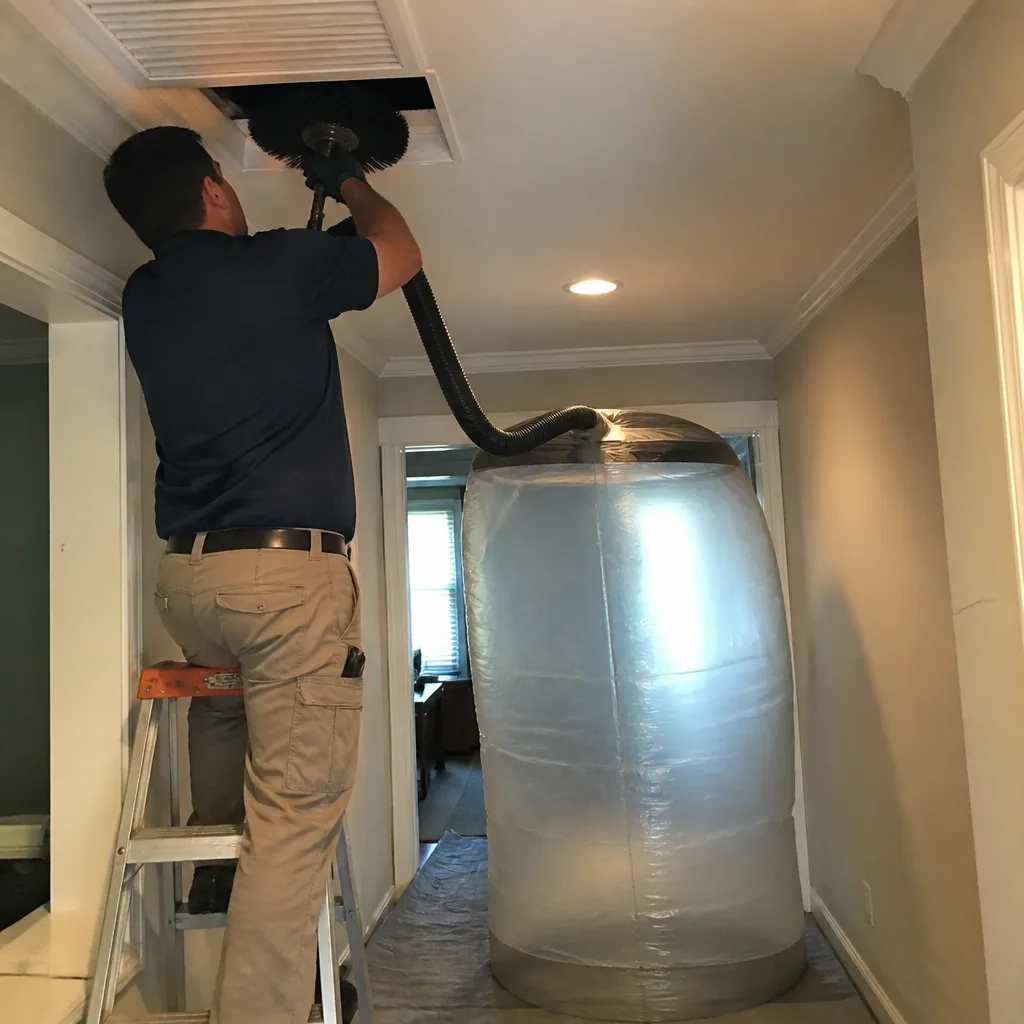
Unpermitted mechanical work creates two distinct liability pools: insurance coverage gaps and disclosure obligations.
Insurance coverage: Most homeowner policies cover sudden, accidental damage but exclude damage from faulty workmanship or code violations. If an unlicensed technician’s duct reconnection fails and causes water damage, your insurer may deny the claim based on unlicensed work exclusion. We’ve seen this in Sandy Springs specifically with high-value homes in the Riverwood neighborhood, where insurers employ post-loss investigators who review permit history.
The documentation gap compounds the problem. A licensed contractor with pulled permits creates a paper trail: permit application, inspection sign-off, final approval. An unlicensed “cleaning” contractor performing repair work leaves no trail, making it impossible to prove when work was performed or by whom. Your insurer’s first question after a duct-related loss will be: “Who performed the work and was it permitted?”
Home-sale disclosure: Georgia’s Seller’s Property Disclosure Statement asks specifically about “modifications, repairs, or additions made without required permits.” This includes ductwork. A seller who genuinely doesn’t know about unpermitted repair work performed during a previous owner’s “cleaning” visit still faces potential liability if the buyer discovers it during inspection.
In Sandy Springs’ competitive market, buyers frequently use specialized inspectors who photograph attic ductwork and cross-reference against permit records. Unpermitted register modifications or duct rerouting can delay closing or trigger repair credits. One home we serviced on Spalding Drive had a $3,400 closing delay because a previous owner’s duct “cleaning” included unpermitted plenum modification that the buyer’s inspector flagged.
The CleanRun approach to this risk is documentation separation. Our cleaning scope, with its written price and photo record, never includes repair work. If we find disconnected duct or other issues requiring repair, we document them photographically and provide a separate written estimate for licensed repair work, with permit requirements explicitly noted. Haven Standard Clause 4: Scope Integrity requires this separation.
How to Protect Yourself: Written Scope Separation
The most effective protection is also the simplest: require written separation of cleaning scope from any repair or modification scope, before work begins.
Step-by-step: what to request from any duct contractor
- Written scope declaration: Ask for two distinct written scopes, even if the same company performs both. Scope A: cleaning only. Scope B: repair/modification only, with explicit note of licensing and permit status.
- License verification: For any Scope B work, verify the contractor’s Georgia Conditioned Air Contractor license at sos.ga.gov. Note that a business license is not a contractor license.
- Permit confirmation: Ask who will pull permits and when. The answer should be specific: “Sandy Springs mechanical permit, pulled by [licensed contractor name], before work begins.”
- Photo documentation requirement: Request before-and-after photographs of every duct run, with timestamps. This creates independent evidence of what was actually done versus what was claimed. CleanRun’s Documented Photo Record, included on every visit since 2013, serves this function automatically.
- Insurance certificate: Request certificate of general liability and workers compensation insurance, naming your property as certificate holder if significant repair work is involved.
- Written warranty separate from cleaning: Cleaning warranties and repair warranties should be distinct documents with different terms. Our 365-Day Done Right Promise applies to our cleaning work; repair work carries separate warranty terms tied to permit completion.
The written price before work starts, required by Haven Standard Clause 1, is your enforcement mechanism. A contractor who cannot or will not separate scopes in writing before naming a price is signaling that they intend to blur the line between cleaning and repair, typically to perform unlicensed repair work without your informed consent.
We provide this separation as standard practice. Our Air Duct Cleaning in Sandy Springs proposals explicitly state: “This scope includes cleaning and photographic documentation only. No repair, modification, or mechanical work is included.” If our technicians find conditions requiring repair, you receive a separate written estimate with license and permit requirements noted.
What Professional Duct Cleaning Should Actually Include
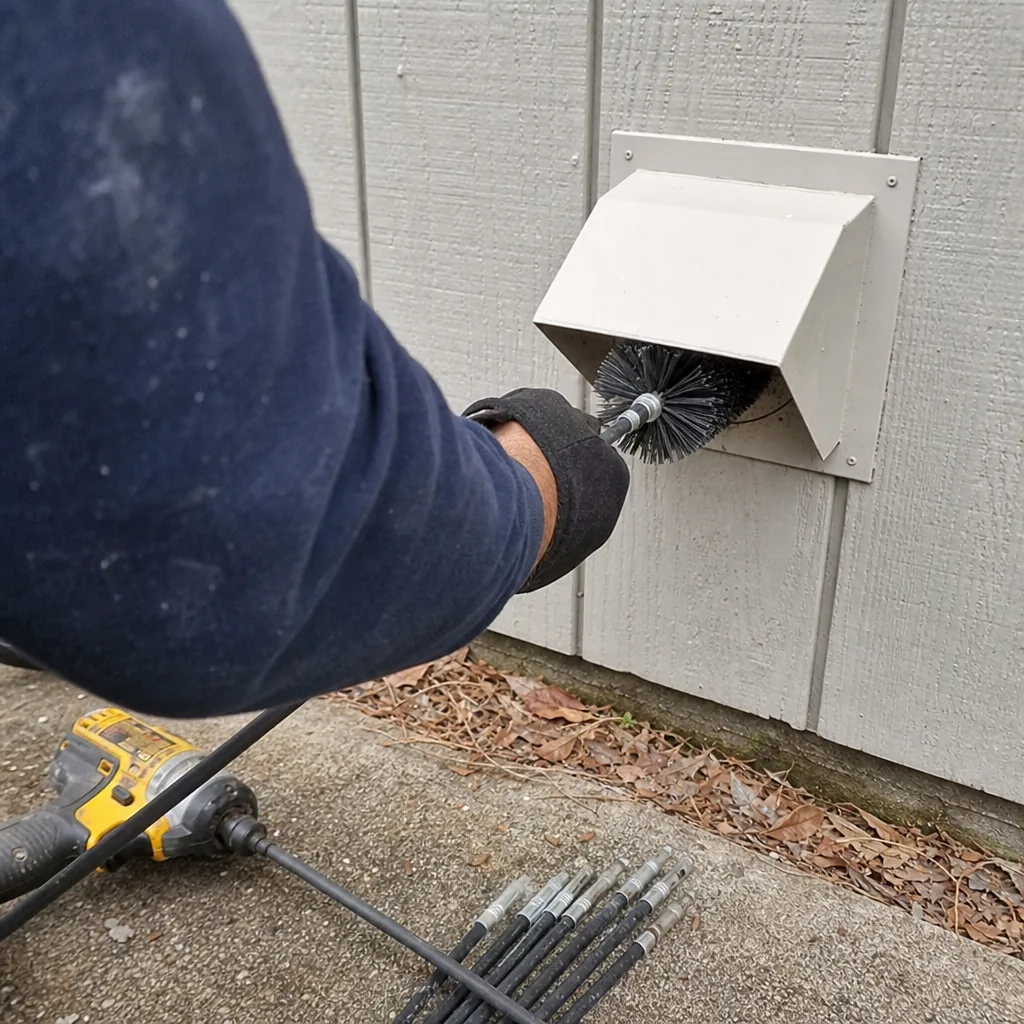
Understanding proper cleaning scope helps you recognize when a contractor is overreaching into regulated repair work, or conversely, when they’re delivering inadequate service.
Standard cleaning deliverables:
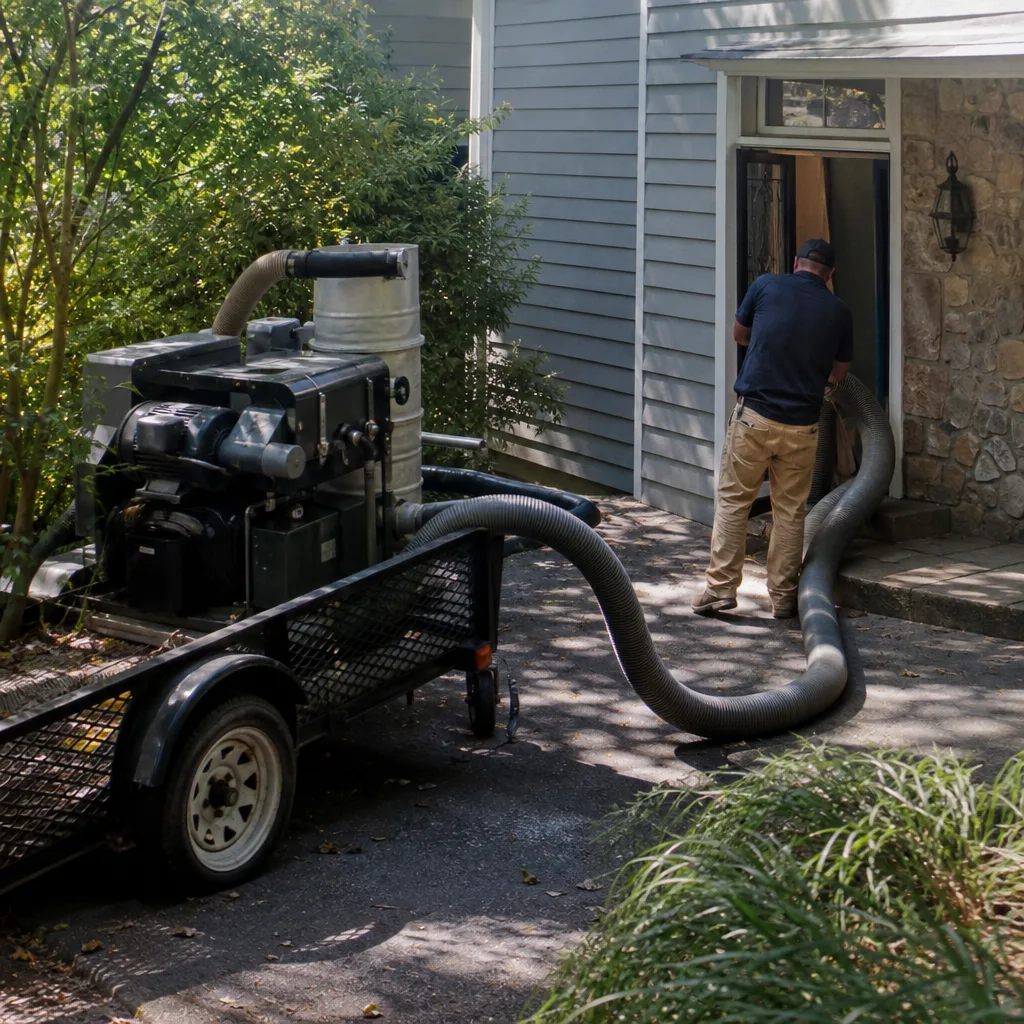
- Negative-pressure extraction of all supply and return duct runs, using equipment such as Rotobrush mechanical brushing systems or Nikro portable extraction units
- Register and grille removal for individual cleaning, not just surface wiping
- Plenum access and visual inspection with photographic documentation
- Filter replacement or cleaning (if customer-supplied or purchased)
- Before-and-after photo record of every duct run, delivered to customer
- Written condition report noting any damage, disconnection, or code violations observed but not repaired
What cleaning should NOT include without separate scope:
- Any disassembly of duct sections beyond register removal
- Application of sealants, mastics, or tapes to joints or leaks
- Reconnection, rerouting, or support modification of existing duct
- Installation of access panels where none existed
- Modification of register size, location, or damper settings
In Sandy Springs, we frequently encounter systems with Aprilaire or Honeywell whole-house air cleaners integrated into the return plenum. Cleaning these integrated components requires care to avoid disturbing electrical connections or filter seals. Our technicians document these components photographically before and after cleaning, noting any observed wear that may require separate service by an HVAC technician.
The equipment brands matter for verification. Professional-grade negative-pressure systems from Rotobrush or Nikro, combined with HEPA filtration from Abatement Technologies, represent industry-standard capability. A contractor using shop vacuums or unbranded equipment cannot achieve proper negative pressure and may compensate by aggressive mechanical manipulation that risks duct damage, then “repair” that damage without proper licensing.
Our HVAC Cleaning in Sandy Springs service extends this documentation approach to the full air handling unit, with the same scope separation principles.
Red Flags: When a “Cleaning” Quote Hides Mechanical Work
Certain quote structures and sales tactics predict the cleaning-repair boundary violation. Watch for these specifically:
- “Complete system restoration” or “full duct rejuvenation”: Vague terms that allow the contractor to claim repair work was implicitly included. Demand itemization.
- Per-vent pricing that changes mid-job: A low per-vent rate that balloons when “unexpected damage” is discovered. This pattern often conceals intentional discovery of pre-existing conditions, followed by unlicensed repair.
- Refusal to provide written scope before arrival: Haven Standard Clause 1 exists precisely because this refusal is a universal red flag. Any contractor who will not commit scope to writing will not commit to regulatory compliance.
- Same-visit repair offers without license discussion: “While we’re here, we can fix that disconnected duct for just…” This is where most homeowners unknowingly accept unpermitted mechanical work.
- No photo documentation offered: If a contractor cannot show you what they found, you cannot verify whether claimed “damage” existed or was created during cleaning.
- Pressure to decide immediately: Urgency theater around “discovered” conditions that must be addressed before the crew leaves. Proper documentation allows time for second opinions and permit verification.
CleanRun’s Free Second Opinion on Any Written Estimate exists for this scenario. Bring us a competitor’s quote with vague scope language, and we’ll itemize what requires licensing and permits versus what doesn’t, in writing.
Our Dryer Vent Cleaning in Sandy Springs service encounters similar boundary issues, where vent rerouting or termination modification requires separate scope and often permit consideration.
Common Mistakes to Avoid
- Assuming all duct services are equally regulated. Georgia’s regulatory gap between cleaning and repair means two companies with identical vans may operate under entirely different legal frameworks. Verify, don’t assume.
- Accepting verbal scope descriptions. Sandy Springs permit disputes are resolved on written records, not memory. If it’s not in writing before work starts, it doesn’t exist for enforcement purposes.
- Confusing business license with contractor license. Any company can obtain a Sandy Springs business license. Only individuals meeting Georgia’s examination and experience requirements hold Conditioned Air Contractor licenses.
- Ignoring attic access limitations. Sandy Springs’ older homes near the Chattahoochee River often have constrained attic access that makes proper duct photography difficult. Contractors who skip photography due to access challenges are skipping accountability.
- Failing to check permit status after repair work. If a contractor claims permits were pulled, verify completion with Sandy Springs Building Department or Fulton County before final payment. Open permits create title problems.
- Not requesting equipment specifications. Professional equipment from recognized manufacturers can be independently verified. Unbranded or consumer-grade equipment signals inadequate capability and potential for damage.
- Overlooking disclosure implications for future sale. Even if unpermitted work causes no immediate problems, it becomes your disclosure burden when selling. Documented, permitted work protects future value.
When to Call a Professional
Call a licensed Conditioned Air Contractor when your duct system needs repair, modification, or replacement, or when inspection reveals conditions beyond cleaning scope. Call a specialized duct cleaning company, with proper documentation practices, for maintenance cleaning and condition assessment.
CleanRun Air Duct Cleaning Sandy Springs offers free estimates in Sandy Springs and surrounding areas, with more guides & resources available on our blog. We provide written scope separation as standard practice, document every duct run photographically, and maintain Georgia Conditioned Air Contractor licensing for work that crosses into repair territory. Our 52,000+ documented jobs since 2013 represent a record of accountability that spans multiple homeownership cycles.
Call (678) 904-9744 for a free estimate. Estimates include written scope declaration, equipment specification, and explanation of any conditions requiring licensed repair with permit requirements noted.
Frequently Asked Questions
No. Air duct cleaning, defined as debris removal from existing ductwork without repair or modification, requires no permit or contractor license in Georgia. However, any repair, reconnection, or modification performed during a cleaning visit may trigger permit requirements. Call (678) 904-9744 for a free estimate with explicit scope declaration.
Whole-system duct cleaning for a typical Sandy Springs home ranges from $450 to $850 depending on system size, accessibility, and contamination level. This includes full negative-pressure extraction of all duct runs, register cleaning, plenum inspection, and documented before-and-after photography. We do not quote per-vent prices. Haven Standard Clause 1 requires one flat price per system, agreed in writing before work starts.
Low quotes typically reflect either inadequate scope (surface cleaning without full duct run extraction) or hidden repair billing (low initial price with mandatory “discovered” upsells). Some unlicensed operators use consumer-grade equipment that cannot achieve proper negative pressure. Ask for written equipment specifications and explicit scope exclusion of repair work.
Demand timestamped before-and-after photographs of every duct run, delivered as part of the job record. CleanRun’s Documented Photo Record, included on every visit since 2013, shows the interior condition of each run before and after cleaning. Without this documentation, you have only the contractor’s word.
Most Sandy Springs homes benefit from cleaning every 3 to 5 years, though homes near construction zones, with pets, or with allergy-sensitive occupants may need more frequent service. The humid climate means biological growth in ductwork progresses faster than in drier regions. Our written condition report after each cleaning includes specific recommendations based on what the camera showed.
Document the work photographically and consult a licensed Conditioned Air Contractor for evaluation. For future sale, disclose the work as “previous owner modification, permit status unknown” rather than concealing it. In Sandy Springs, retroactive permitting may be possible for minor work, though significant modifications may require partial rework. CleanRun can assess whether observed conditions constitute cleaning scope or require licensed repair referral.
The Bottom Line
Georgia’s regulatory framework creates a dangerous gap: duct cleaning is unregulated, but duct repair and modification are strictly licensed and often permitted. Contractors who blur this boundary expose homeowners to insurance denial, failed inspections, and disclosure liability. The protection is written scope separation, photographic documentation, and explicit license verification before any repair work begins. In Sandy Springs’ active real estate market and humid climate, these protections are not administrative niceties but financial necessities. Demand written prices, documented results, and verifiable credentials from any contractor who enters your home.
Written by Tomas Reyes, Owner at CleanRun Air Duct Cleaning Sandy Springs, serving Sandy Springs since 2013.