
Last updated September 23, 2026
Whole-system duct and dryer vent check with before-and-after photos - you see exactly what came out of your vents
That "$99 whole-house special" is a bait ad - the real number appears once they are in your hallway, or the "clean" is a shop-vac at the register. We photograph the inside of your ducts before and after instead.
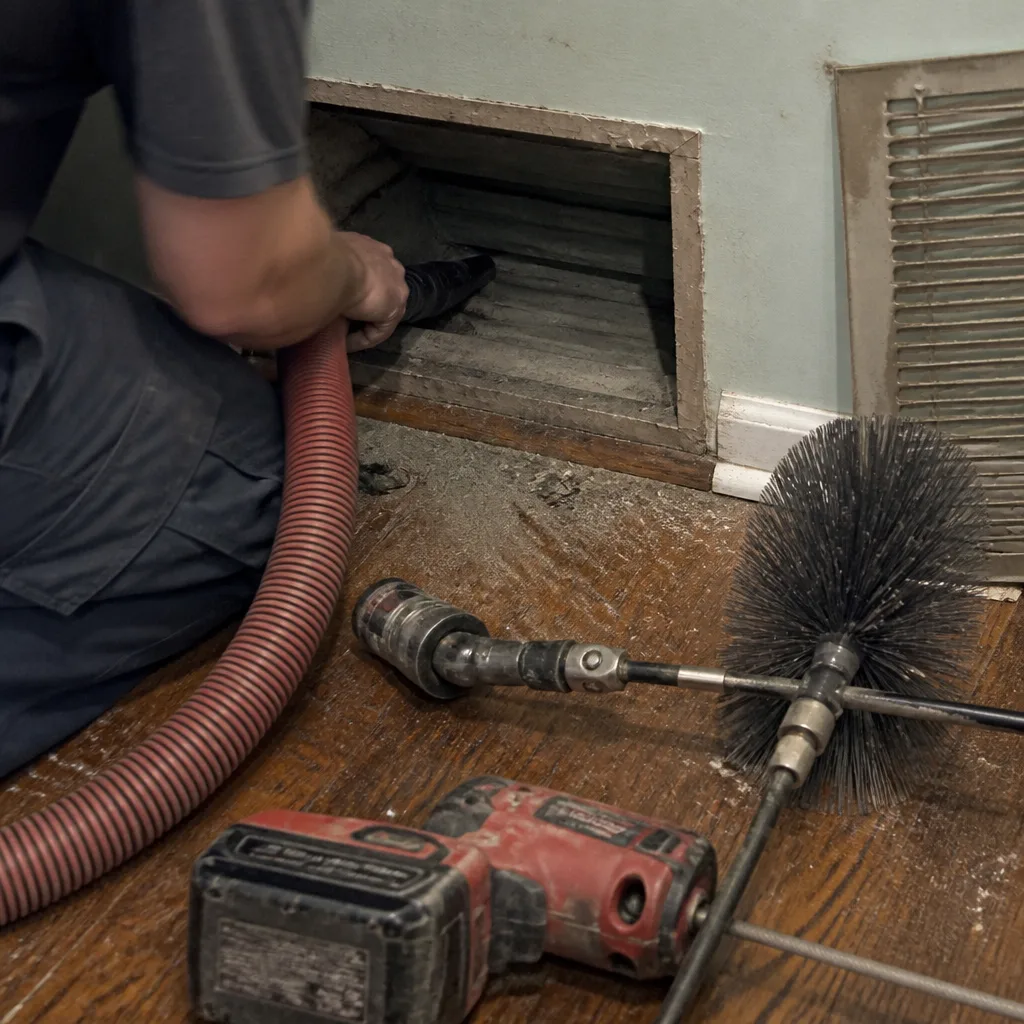 Before
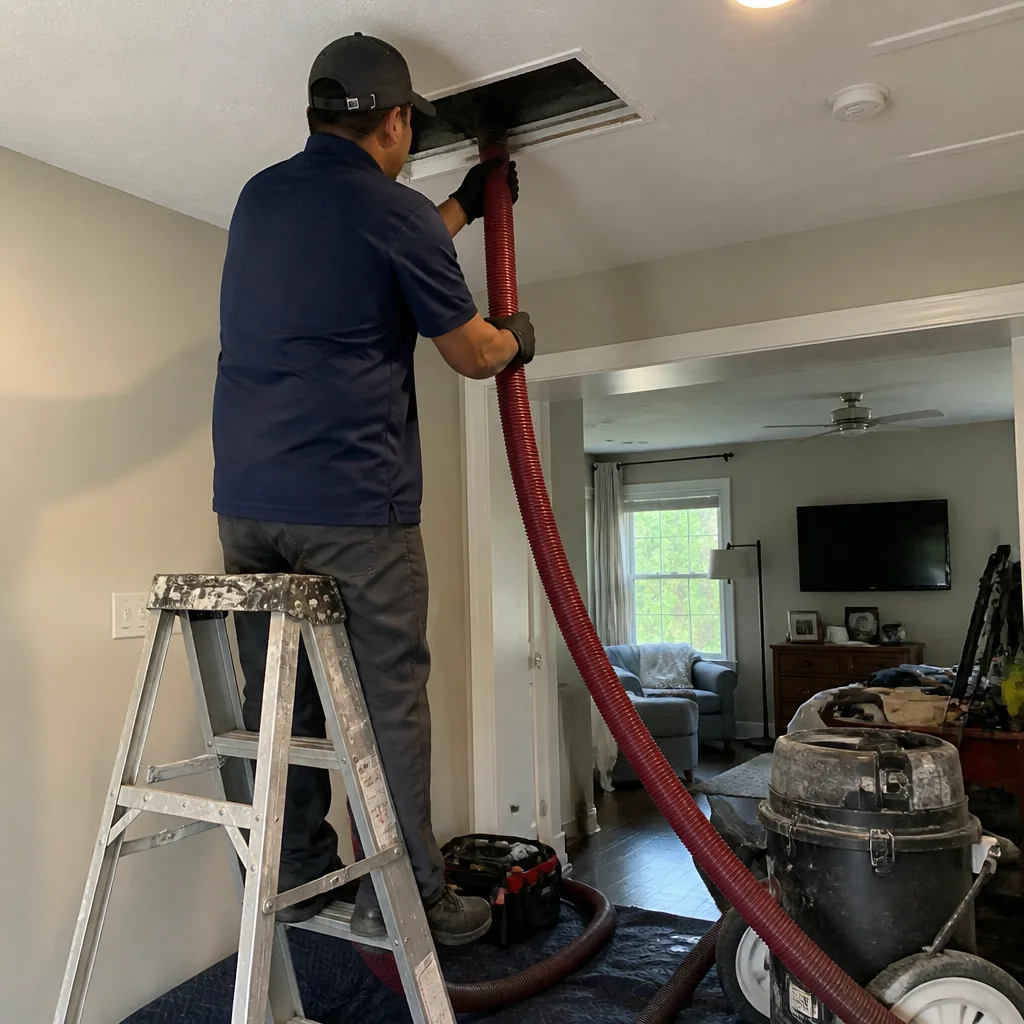 After
After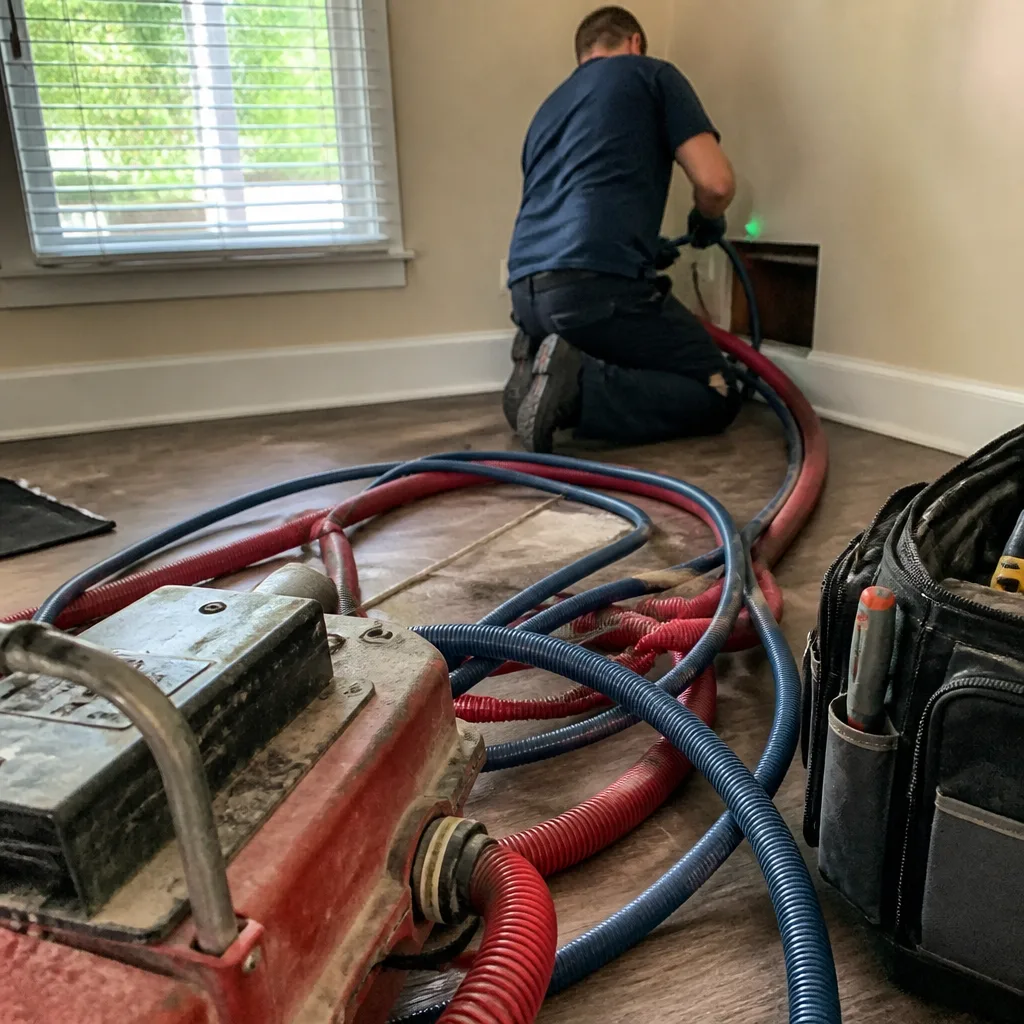 Before
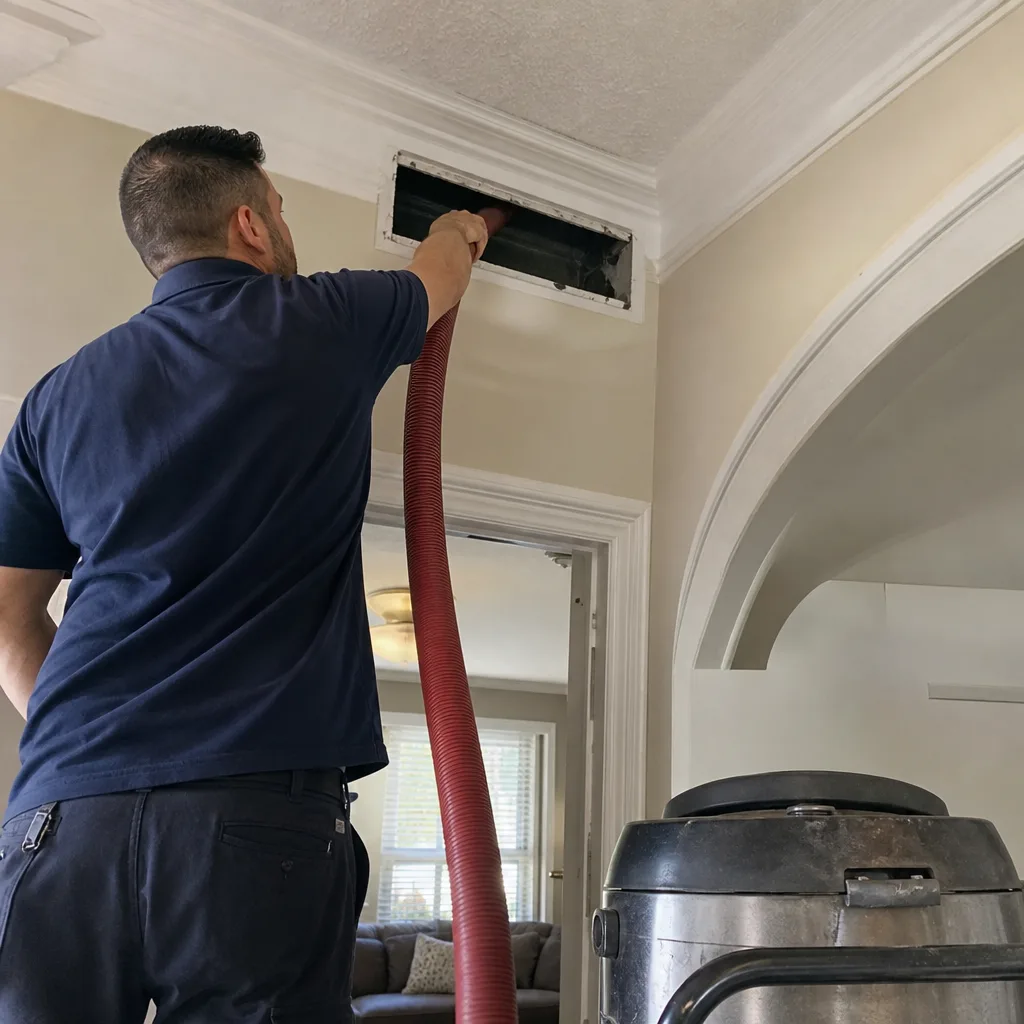 After
After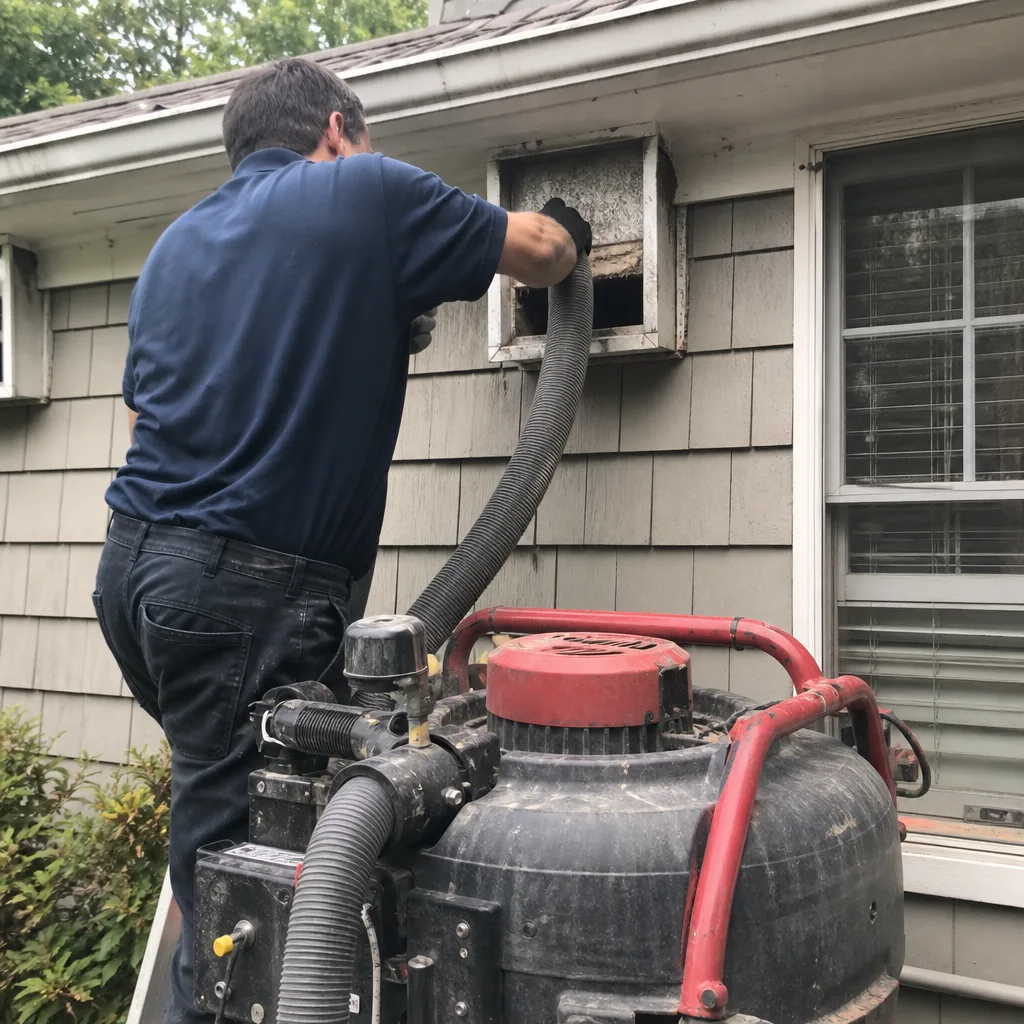 Before
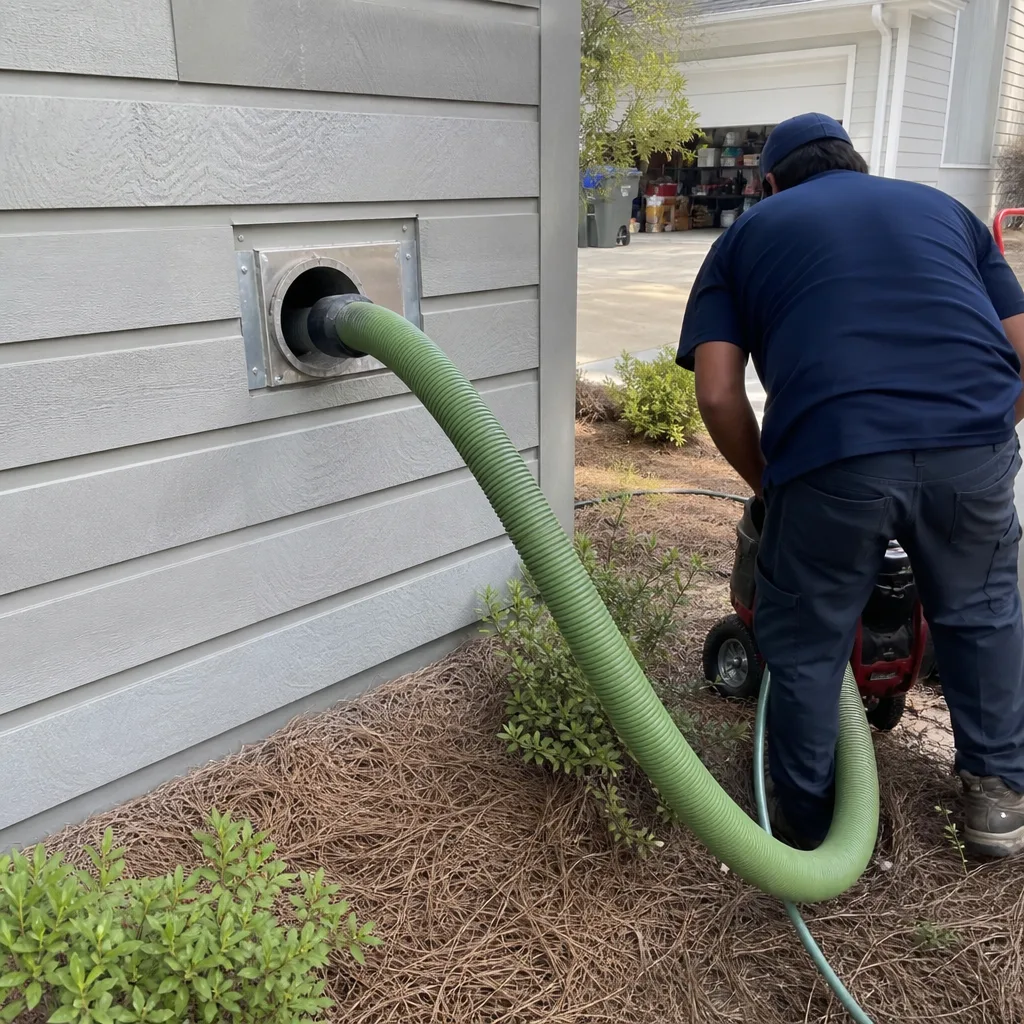 After
AfterAir Duct Cleaning Maintenance Checklist for Sandy Springs Homeowners
Most Sandy Springs homeowners have never looked inside their own ductwork. In twelve years of documented inspections, we’ve found that the single most telling diagnostic takes thirty seconds and a flashlight: removing one supply register and photographing the collar. What you see there, a 3-inch debris build-up or clean metal, predicts the condition of the entire run better than any “duct cleaning special” coupon ever could. This guide gives you a register-by-register inspection protocol you can run yourself, calibrated to Sandy Springs’ pollen calendar and Georgia humidity, plus a documentation system that protects you from both maintenance theater and bait-and-switch pricing when you do hire a professional.
Quick Answer
A practical air duct maintenance checklist for Sandy Springs homeowners includes monthly register visual checks, filter changes timed to local pollen peaks (March-April and September-October), quarterly return grille inspections, and annual documentation photos of accessible collar areas. Tasks requiring professional equipment, Air Duct Cleaning with negative-pressure extraction and internal camera verification, should be scheduled every 3-5 years for most homes, or sooner if visual inspection shows debris build-up, mold indicators, or restricted airflow at multiple registers.
Table of Contents
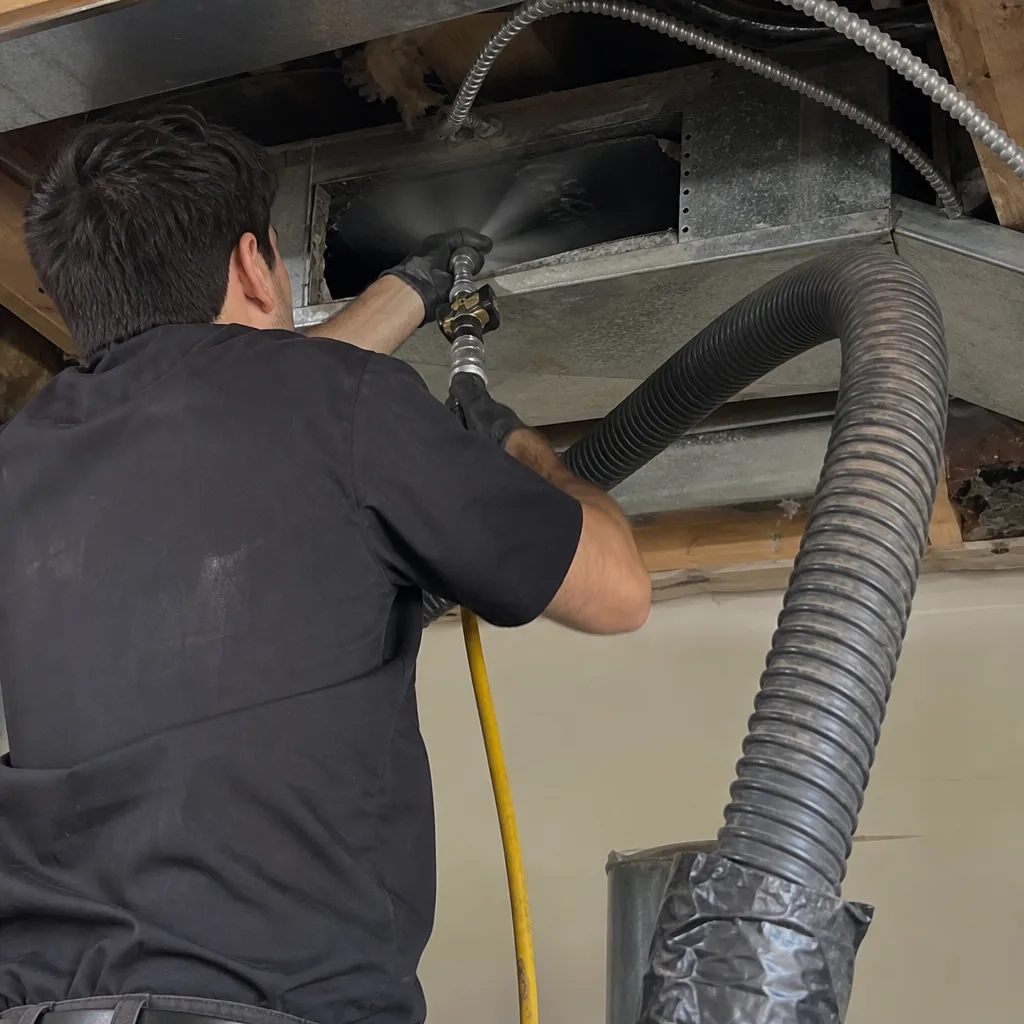
- The 30-Minute Register-by-Register Visual Protocol
- Filter Replacement: Sandy Springs Pollen Calendar vs. Generic Advice
- Documenting Your System With a Phone Camera
- What Actually Extends Cleaning Intervals vs. Maintenance Theater
- Georgia Humidity, Mold Indicators, and What to Watch For
- The One-Page Log Template for Your HVAC Equipment
- Common Mistakes to Avoid
- When to Call a Professional
- Frequently Asked Questions
BeforeAfterThe 30-Minute Register-by-Register Visual Protocol
The inspection protocol we teach Sandy Springs homeowners starts with what you can see from floor level. No ladders, no tools beyond a flashlight and your phone. Every supply register, the vent where conditioned air enters your room, and every return grille, where air cycles back to the unit, follows the same sequence.
What you’ll need: flashlight, phone camera, notepad or the log template in the final section.
- Turn the system fan ON. This creates negative pressure at returns and positive pressure at supplies, which can dislodge loose debris you’ll want to observe.
- Remove one supply register. Most lift out with gentle upward pressure; some have a single screw. Set it aside on a towel.
- Shine your flashlight into the collar, the short metal sleeve connecting the register to the duct run behind the wall or floor. Look for: accumulated dust matting (not loose surface dust, but compacted layers), dark staining that smudges when touched (possible mold), insect debris or rodent droppings, and restricted airflow, the collar opening should look roughly the same diameter as the register face.
- Photograph the collar from two angles: straight on, and angled to show depth. Include the room name in your phone’s file name, e.g., “master_bedroom_supply_2025_01.”
- Replace the register and note findings. Repeat for every supply in the home. Typical Sandy Springs homes built 2015-2025 have 8-14 supply registers.
- Inspect return grilles without removal. Returns are usually larger and harder to detach. Instead, shine light through the grille and photograph any visible debris on the filter surface behind it. Note if the filter appears bowed or sucked inward, indicating high restriction.
What concerning findings look like: a collar with more than 1/4 inch of compacted debris, any visible moisture or dark fuzz on metal surfaces, or a supply register where airflow feels noticeably weaker than an identical register in a nearby room. In Sandy Springs’ Riverside, Dunwoody Club Forest, and Huntcliff neighborhoods, we’ve documented that homes near the Chattahoochee River corridor show higher debris accumulation in first-floor supplies due to seasonal humidity patterns drawing particulate through foundation gaps.
Time investment: 2-3 minutes per register. A 10-register home takes under 30 minutes including photography.
Filter Replacement: Sandy Springs Pollen Calendar vs. Generic Advice
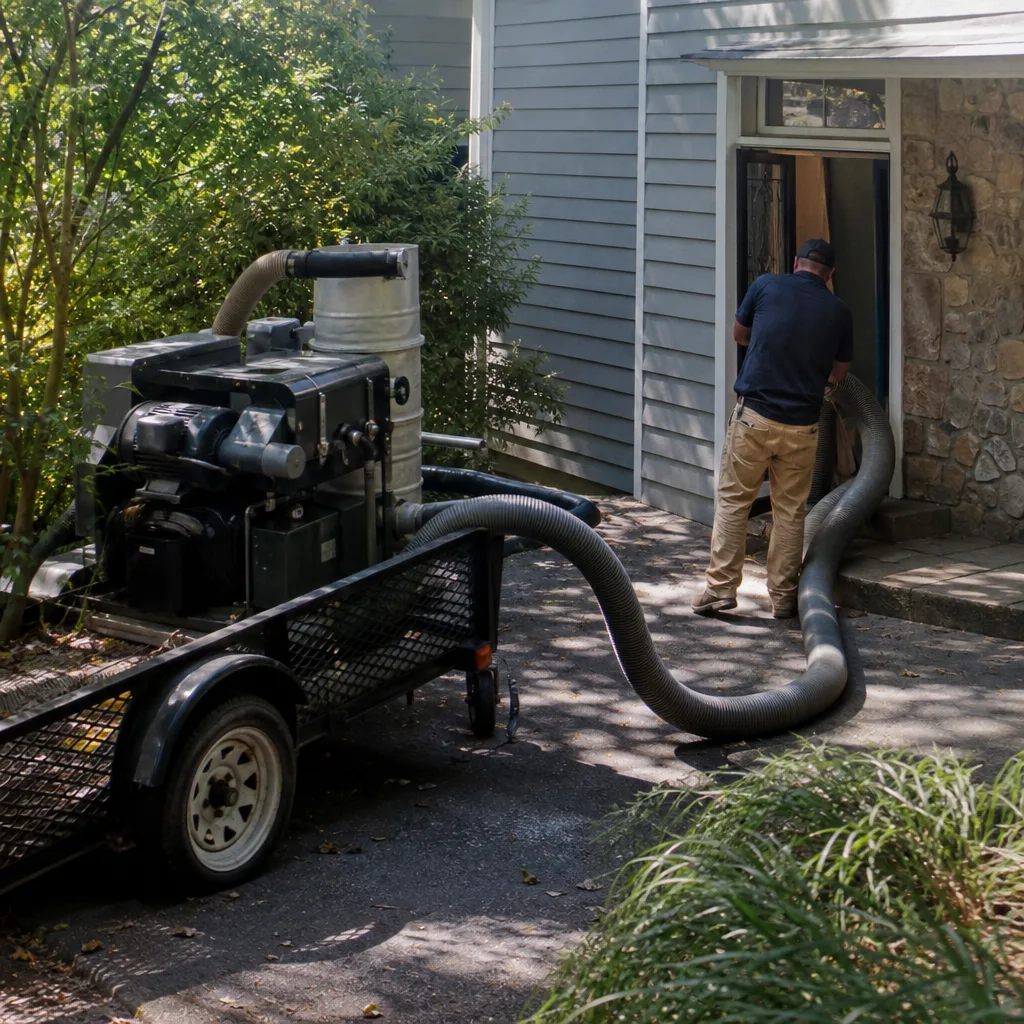
The “change your filter every 90 days” advice fails in North Georgia. Sandy Springs sits at the intersection of two pollen regimes: early tree pollen, oak, pine, birch, peaking late March through April, and a secondary grass pollen surge in September-October that coincides with homeowners switching from cooling to heating. Generic quarterly replacement means your filter is often saturated during peak load periods.
Sandy Springs-specific replacement calendar:
- January: Baseline change. Post-holiday heating load, pre-pollen season.
- Late March: Pre-emptive change before tree pollen peak. Check the old filter; if it’s gray with visible yellow-green accumulation, you waited too long.
- Mid-May: Post-pollen change. Even if the filter looks acceptable, the pore structure is often loaded with microscopic pollen fragments that restrict airflow.
- Late August: Pre-emptive change before grass pollen and heavy cooling load overlap.
- Mid-November: Heating season startup. Summer’s accumulated dust and the first heating cycle can release odors if the filter is saturated.
Filter selection matters for documentation, not just performance. We recommend MERV 8-11 filters for most Sandy Springs homes; higher MERV ratings restrict airflow in systems not designed for them, and lower ratings pass too much fine particulate. Honeywell and Aprilaire both manufacture filters in this range with date-stamped frames, which helps with the documentation protocol below. If you cannot recall your last filter change date, the filter is overdue.
Homes in Sandy Springs’ older sections, those built before 1990 with original ductwork, may need more frequent changes due to leaky return plenums, the large central chamber where return air collects before entering the unit, drawing attic or crawl space debris. Newer construction in neighborhoods like Sandy Springs ITP and the Pill Hill medical district area typically has tighter duct systems but may have flex duct, the ribbed plasticized tubing common in post-2005 builds, that traps debris at bends.
Documenting Your System With a Phone Camera
The photo record CleanRun delivers on every job, before and after every duct run, exists because most homeowners have no baseline. Without documentation, any technician’s claim about “what we found” is unverifiable. You can build your own baseline with the same rigor.
Annual documentation routine:
- Date-stamped collar photos at two supplies and one return. Choose the same locations each year: typically the master bedroom supply, the kitchen or main living area supply, and the largest return grille. These represent different duct run lengths and usage patterns.
- Filter photo at each change, showing the date written on the frame and the visible loading condition.
- Outdoor unit photo, showing the condenser coils and surrounding clearance. Debris accumulation here correlates with indoor duct loading over time.
- Indoor air handler photo, if accessible, showing the evaporator coil area and drain pan condition. In Sandy Springs, algae growth in condensate drain pans is common June-September and can indicate humidity management issues that affect duct moisture.
Store these in a dedicated album or cloud folder labeled with your address and “HVAC baseline.” When you later request estimates for Air Duct Cleaning in Sandy Springs, you have dated evidence to discuss with technicians. If a company cannot explain how their proposed scope addresses what your photos show, that is useful information.
The documentation also protects at resale. Sandy Springs’ active 2015-2025 home market means many owners will sell within 5-10 years of purchase. A dated photo record of duct condition demonstrates maintenance diligence to buyers and can deflect post-inspection demands for immediate Air Duct Cleaning Permits, Codes & Inspections in GA: What You Need to Know.
What Actually Extends Cleaning Intervals vs. Maintenance Theater
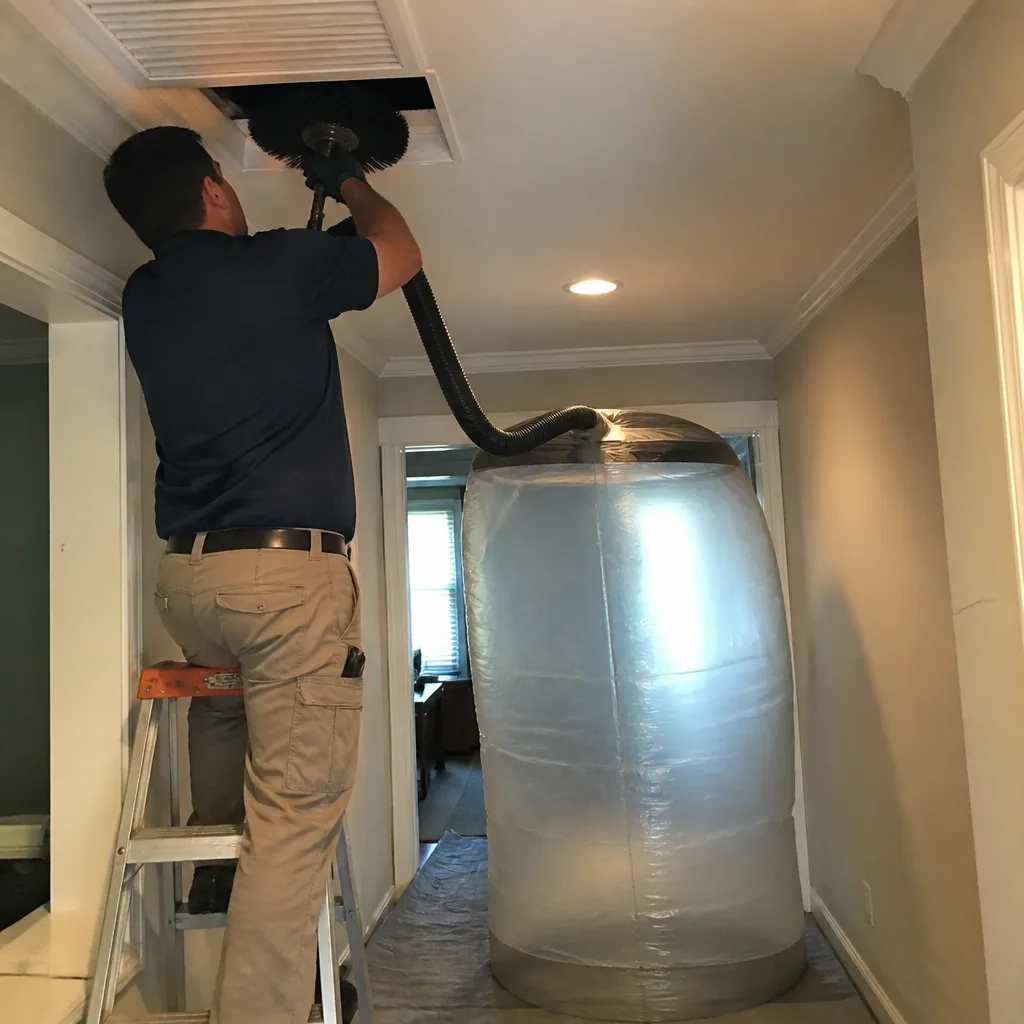
Not every checklist item changes your system’s trajectory. Some are performative, they feel productive without measurable impact. Here’s the distinction based on what we’ve documented across 52,000+ homes.
Genuinely effective:
- Consistent filter changes timed to local conditions. This is the single largest factor in extending professional cleaning intervals. A homeowner who changes filters on the Sandy Springs calendar above typically extends their cleaning interval by 12-18 months compared to 90-day generic adherence.
- Sealing visible leaks at register boots. The metal sleeve where the duct meets the wall or floor often separates from drywall over time. A bead of mastic sealant or metal tape (not duct tape, which degrades) at this joint prevents the system from drawing wall cavity debris into the airflow.
- Maintaining 2-foot clearance around outdoor condenser units. This reduces the particulate load the system processes, which eventually circulates through ducts.
- Running bathroom exhaust fans during showers and 15 minutes after, especially in Sandy Springs’ July-September humidity peaks. Excess moisture raises duct humidity, which binds dust to metal surfaces and supports microbial growth.
Maintenance theater:
- Register cover washing without collar inspection. Clean grilles look nice but reveal nothing about duct condition.
- Essential oil or spray treatments on filters. These add volatile compounds to airflow without particulate reduction and can damage filter media.
- Vacuuming only the register face. A household vacuum cannot generate the negative pressure, measured in inches of water column, needed to extract debris from duct runs. The practice is harmless but ineffective beyond the first 6 inches.
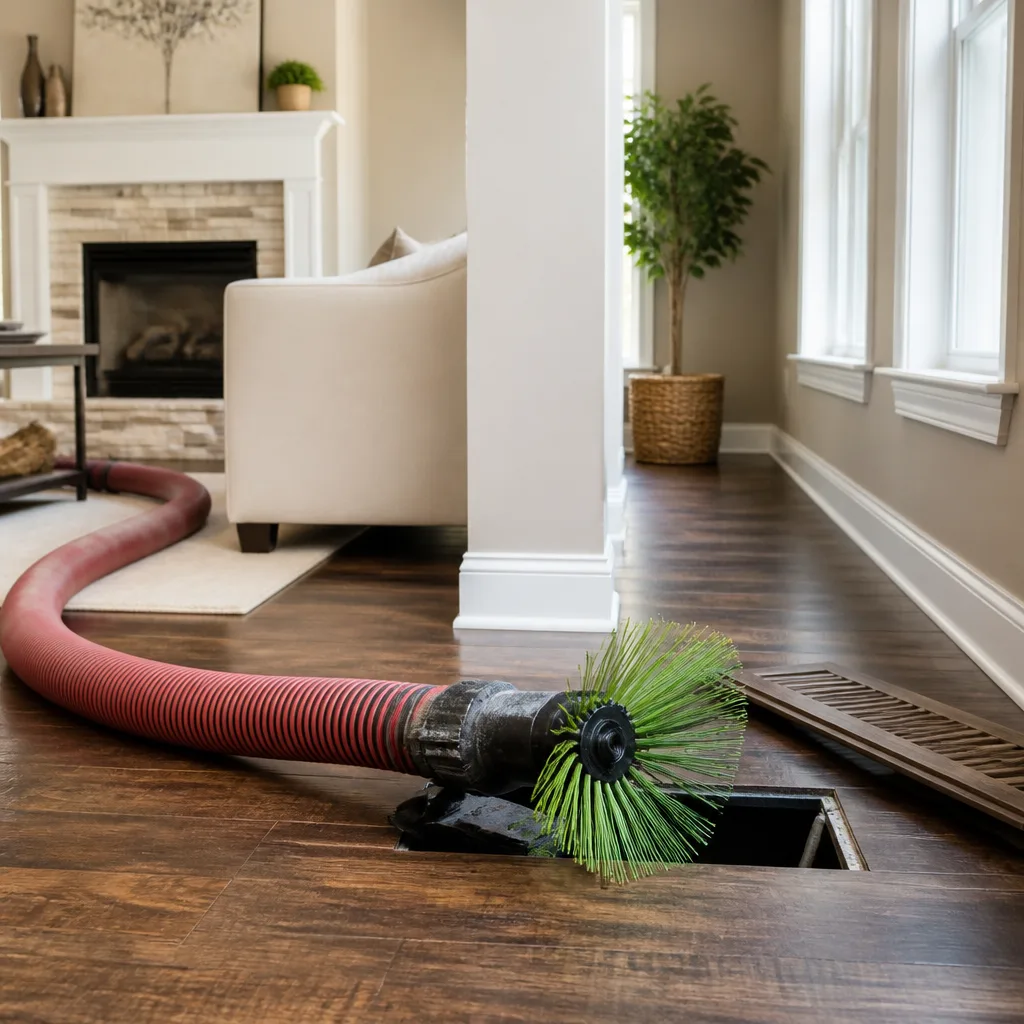
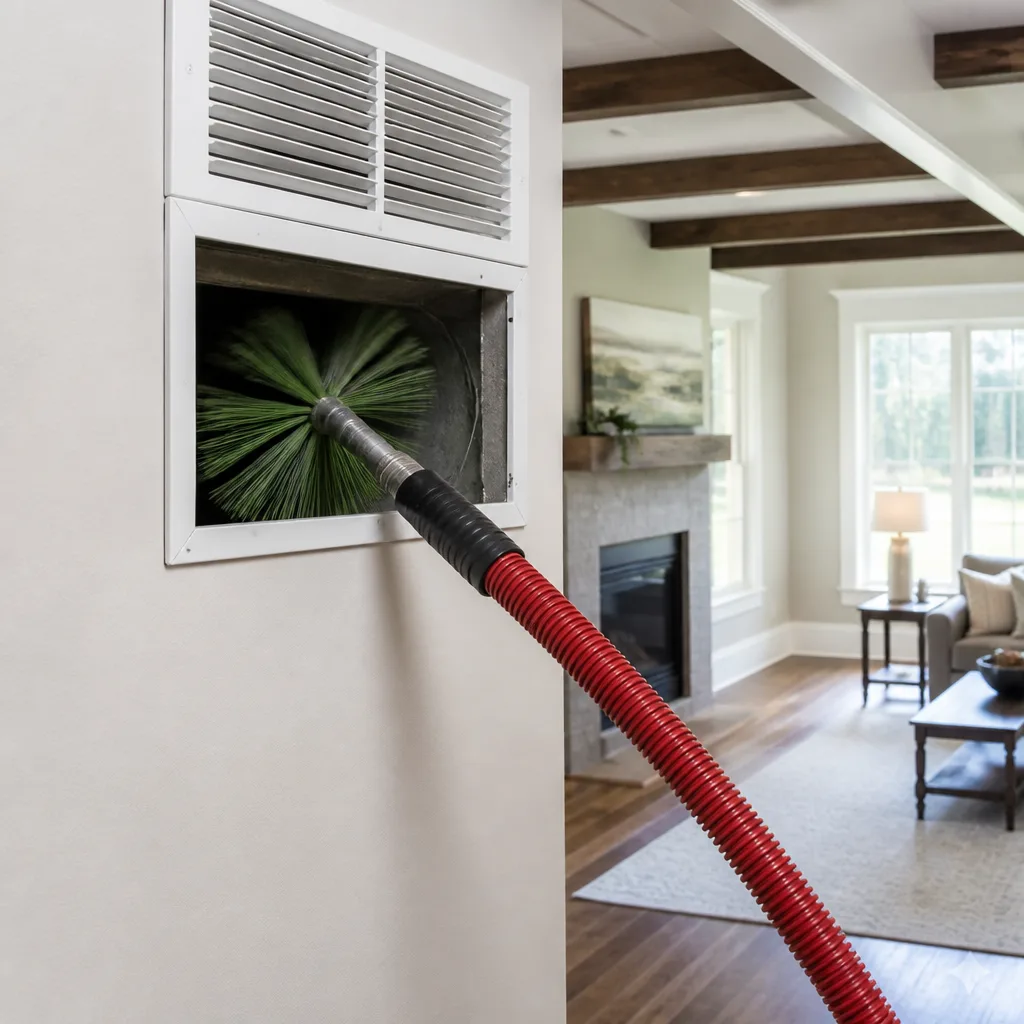
- “Duct cleaning” attachments for residential vacuums. These lack the agitation brushes and HEPA containment of professional equipment like the Rotobrush systems CleanRun deploys. We’ve photographed the results: surface disturbance without debris removal, which can actually push particulate deeper into the run.
The Haven Standard Clause 1, Written Price Before Any Work Starts, exists partly because theater items are often bundled into low-initial-quote packages. A technician who spends 20 minutes on register washing can bill for “duct maintenance” without entering the system.
Georgia Humidity, Mold Indicators, and What to Watch For
Sandy Springs averages 70%+ relative humidity from June through September, with July peaks often exceeding 80%. This is not a comfort issue alone; it fundamentally changes what happens inside ductwork. Dry dust becomes adhesive. Microbial growth thresholds drop. Condensation forms on cool duct surfaces in unconditioned spaces.
Visual indicators requiring professional assessment:
- Dark, fuzzy growth on collar metal that smears when wiped with a cotton swab. Dust is dry and fibrous; mold is cohesive and stains the swab.
- Musty odor at system startup that dissipates after 10 minutes. This often indicates microbial growth on the evaporator coil or in the drain pan, not necessarily in ducts, but the two conditions frequently coexist.
- Water staining or rust on register boots or nearby ceiling/wall surfaces. Indicates condensation or leak paths that bypass the duct system’s intended boundaries.
- Inconsistent cooling with no thermostat issue. Restricted airflow from debris or microbial matting can cause some rooms to lag; in Sandy Springs’ multi-level homes, this often masquerades as a zoning problem.
Homes near the Chattahoochee River, including parts of the River Chase and Riverside communities, experience higher basement and crawl space humidity that translates to duct loading. Homes with encapsulated crawl spaces, increasingly common in 2018+ Sandy Springs construction, generally show lower duct moisture but require dedicated dehumidification maintenance.
We do not recommend homeowner mold testing kits; they lack the air-flow calibration to distinguish settled spores from actively circulated contamination. If visual indicators are present, professional assessment with camera verification and, if warranted, laboratory sampling is the defensible path. CleanRun’s documented photo record includes any areas of concern with magnification sufficient for third-party review.
The One-Page Log Template for Your HVAC Equipment
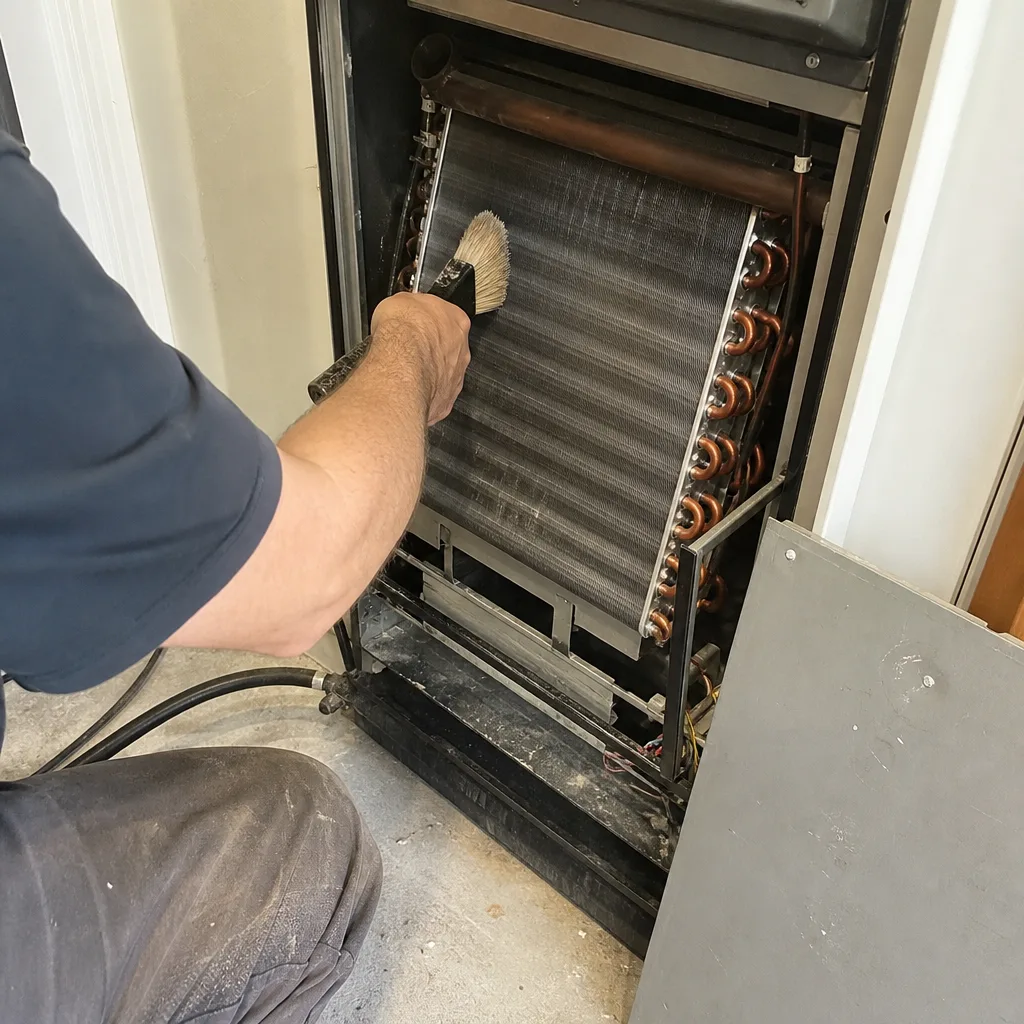
A log kept with your HVAC equipment, taped inside the air handler cabinet or on the utility room wall, creates continuity across technicians, homeowners, and years. It also prevents the “when did we last…” conversation that leads to neglected maintenance or redundant service calls.
Recommended log format:
| Date | Action | Location/Register | Finding/Result | Photo File Name | Technician/Company |
|---|---|---|---|---|---|
| Example: 2025-01-15 | Filter change | Return grille, hallway | MERV 11, moderate loading | Hall_return_filter_2025_01 | Self |
| Example: 2025-03-20 | Register inspection | MBR supply, KIT supply, LR return | MBR collar: 1/8″ debris; others clean | MBR_supply_2025_03, etc. | Self |
| Example: 2025-09-10 | Professional cleaning | Full system, 12 supplies, 3 returns | Written price $X; photo record delivered | CleanRun_delivered_2025_09 | CleanRun Duct Repair & Cleaning |
Include at the top of the log: system brand and model, installation date if known, duct material type (sheet metal, flex, fiberboard), and any previous cleaning dates with company names. This log becomes part of your home’s maintenance record, transferable to buyers and referenceable for warranty claims.
For Sandy Springs homeowners in condo or townhome associations, the log also clarifies boundary responsibilities. Some associations maintain trunk ducts, the large central lines, while owners maintain branch runs to individual units. Document who has accessed what to prevent duplicate billing.
Common Mistakes to Avoid
- Waiting for visible dust at registers. By the time debris reaches the register face, the duct run behind it is typically heavily loaded. The collar inspection catches accumulation earlier.
- Using the cheapest available filter. Fiberglass panel filters, often labeled “30-day,” pass fine particulate that accumulates in ducts and on coils. The nominal savings are offset by earlier professional cleaning needs and potential coil damage.
- Ignoring the return side. Returns pull air, and debris, from your living space. A clean supply system with dirty returns recirculates particulate immediately. Inspect both.
- Scheduling cleaning based on calendar alone. A home with excellent filter discipline and tight ductwork may need cleaning every 5-7 years; a home with pets, renovation activity, or poor filtration may need it every 2-3. The register inspection protocol tells you which you are.
- Accepting per-vent pricing. This structure incentivizes superficial work at many points rather than thorough work at the system level. CleanRun quotes one flat price per system, agreed in writing before work starts, Haven Standard Clause 1.
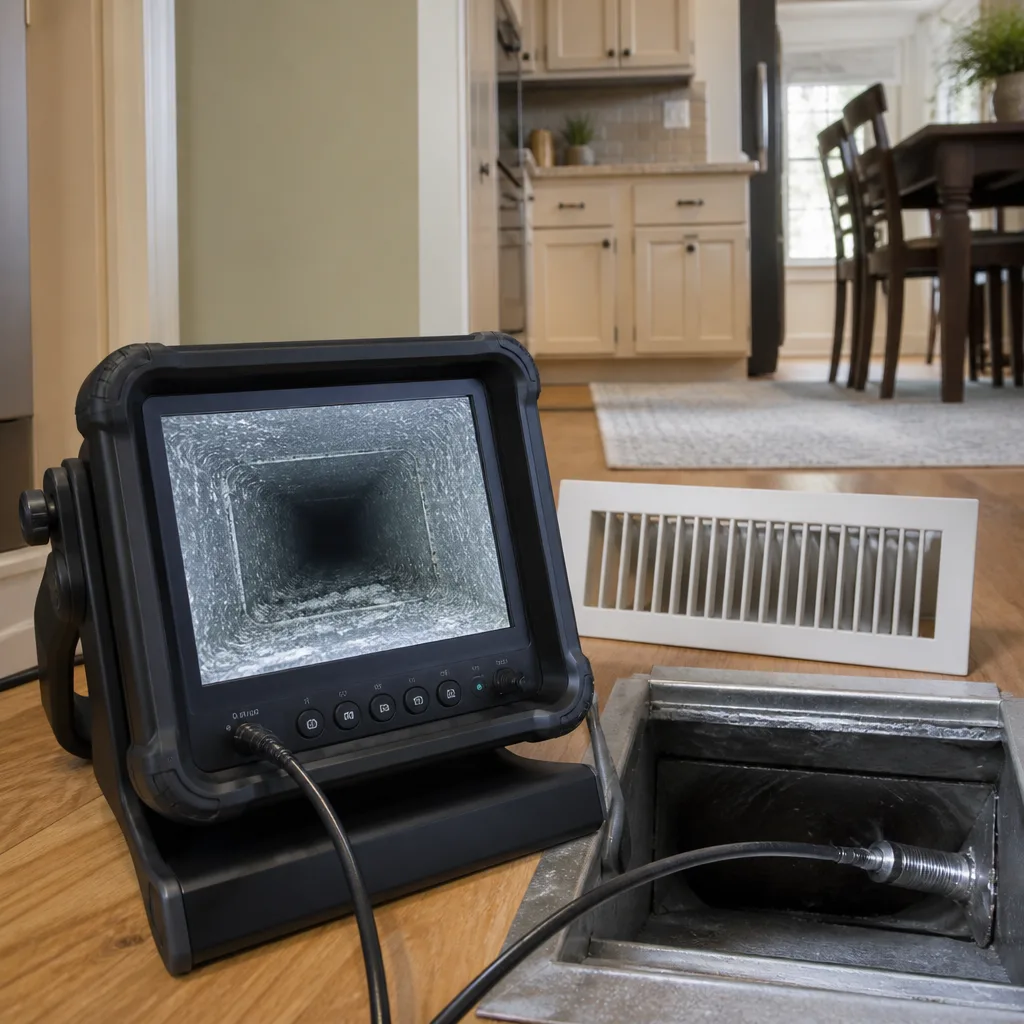
- Not requesting the photo record. Any technician with professional equipment, Nikro and Abatement Technologies systems include camera attachments as standard, can show you what was found. If a company “doesn’t do photos,” that is a choice, not a limitation.
When to Call a Professional
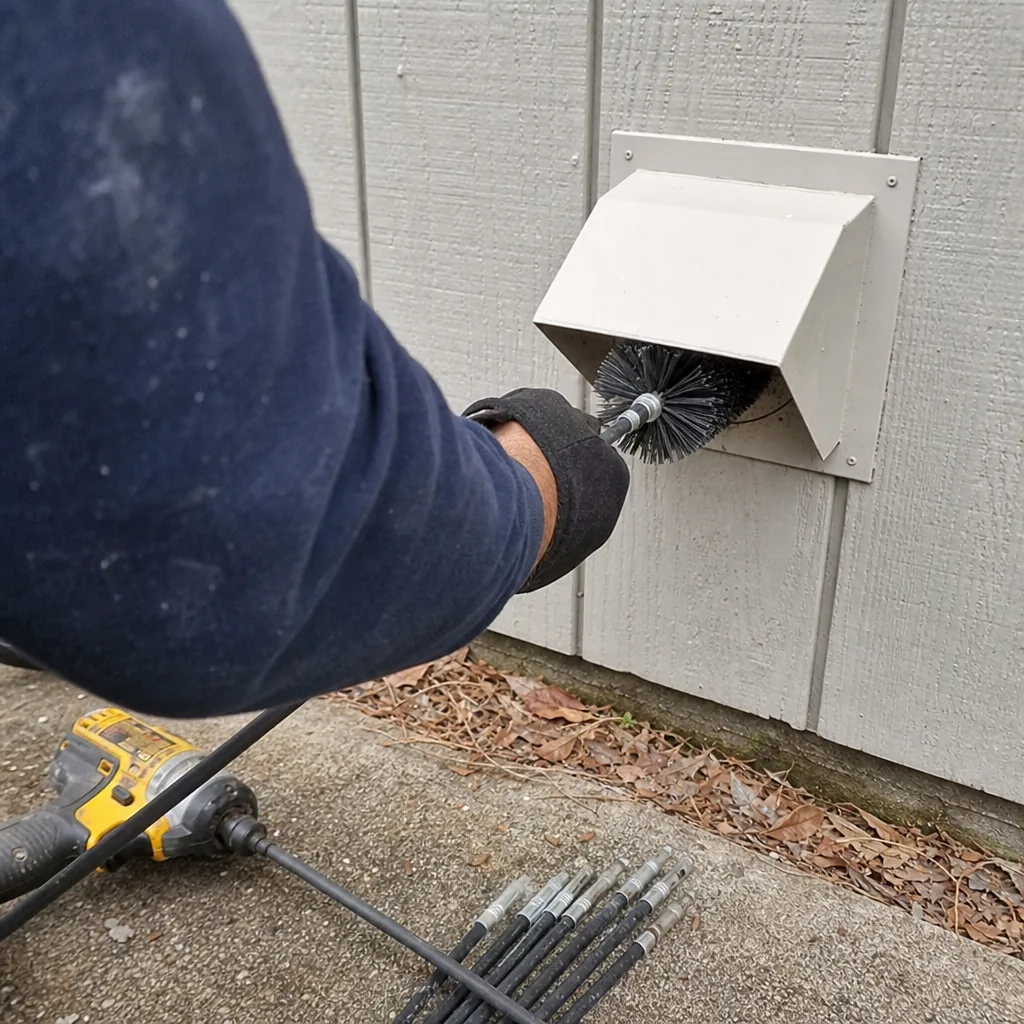
Call for professional assessment when: your register inspection shows Air Duct Cleaning Warning Signs: A Sandy Springs Homeowner’s Reference Guide like compacted debris exceeding 1/4 inch at multiple collars; you observe any moisture, staining, or growth indicators; airflow is noticeably uneven between rooms with all dampers open; or your documentation log shows progressive deterioration year over year. Post-renovation cleaning is also warranted, construction dust bypasses even diligent filter changes.
Professional cleaning should include negative-pressure extraction, agitation tools appropriate to your duct material, and a documented photo record of every run. Equipment from recognized manufacturers, Rotobrush, Nikro, Abatement Technologies, and others, can be verified by model number if a company is transparent.
CleanRun Air Duct Cleaning Sandy Springs offers free estimates in Sandy Springs. Every estimate includes a written price before any work starts, and every completed job delivers a documented photo record. Call (678) 904-9744 to schedule.
Frequently Asked Questions
Whole-system air duct cleaning for a typical Sandy Springs home, 1,800-3,200 square feet with 8-14 supply registers, generally ranges from $400-$700 when performed with proper equipment and documentation. Prices below $300 typically indicate either per-vent add-on structures or equipment insufficient for negative-pressure extraction. CleanRun provides one flat price per system, agreed in writing before work begins, with no per-vent charges. Call (678) 904-9744 for an exact quote, estimates are free.
Low initial quotes often rely on per-vent pricing that increases at the door, or shop-vacuum equipment that disturbs debris without containing or removing it. The $79-$129 “whole house” offers we’ve reviewed in the Sandy Springs market universally add charges for “extra” vents, sanitizing, or photo documentation. A legitimate quote specifies the equipment type, the scope of work in terms of supplies and returns cleaned, and whether photo documentation is included. CleanRun’s written price under Haven Standard Clause 1 is the full price.
Request a documented photo record showing the inside of every duct run before and after cleaning, with identifiable landmarks, elbows, joints, or register collars, that match your home’s layout. Without this, you have only the technician’s word. CleanRun has delivered this record on every job since 2013; it is included as standard, not an upgrade.
For homes with consistent filter changes on the local pollen calendar and no major aggravating factors, every 4-6 years is typical. Homes with multiple pets, recent renovation, or visible debris accumulation at register collars may need 2-3 year intervals. Sandy Springs’ high-humidity summers can accelerate accumulation compared to drier climates. The register inspection protocol in this guide tells you your specific interval better than any generic recommendation.
No. Residential vacuums generate approximately 2-4 inches of water column suction; professional negative-pressure systems operate at 10-15 inches with HEPA containment and agitation brushes. Vacuum attachments disturb surface debris without extraction, often pushing it deeper into the run. We’ve photographed the results: visibly disturbed but still-loaded ducts. The effective DIY tasks are filter changes, register inspections, and leak sealing at accessible joints.
Yes. The combination of heavy spring tree pollen, September grass pollen, and four-month humidity peaks above 70% creates conditions that accelerate both particulate accumulation and microbial adhesion. Homes near the Chattahoochee River corridor or with crawl space duct runs experience amplified effects. Filter changes timed to local pollen peaks, not generic quarterly schedules, are the primary adaptation.
Homeowner-effective tasks: filter changes, visual register inspections, basic leak sealing at register boots, and outdoor unit clearance maintenance. Professional-required tasks: negative-pressure extraction of full duct runs, internal camera inspection and documentation, evaporator coil cleaning, plenum and trunk line access, and microbial remediation if indicated. The dividing line is equipment capability and containment, not skill or effort.
The Bottom Line
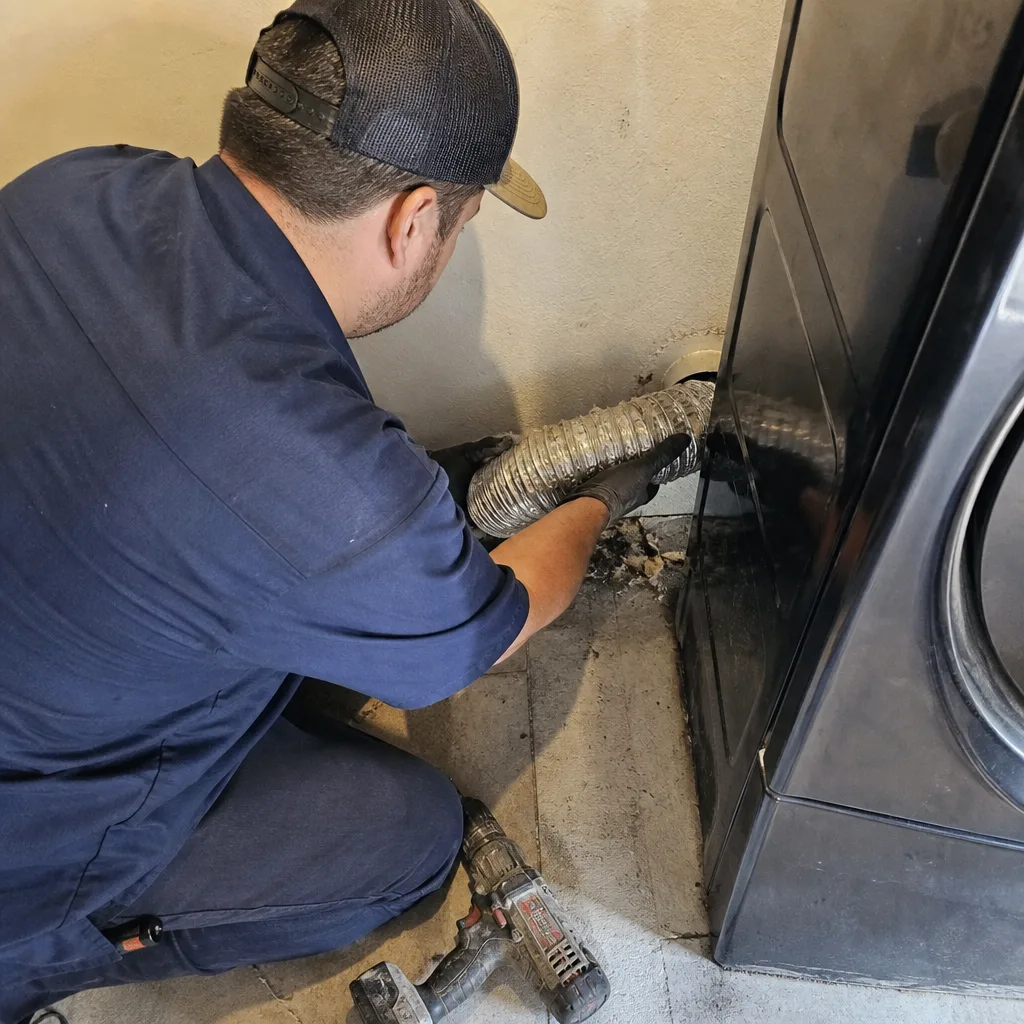
The most useful air duct maintenance checklist is one you can actually execute and verify. For Sandy Springs homeowners, that means register-by-register visual inspection timed to your annual calendar, filter changes aligned to local pollen peaks rather than generic quarterly advice, and a documentation habit that creates evidence instead of relying on trust. The tasks that genuinely extend cleaning intervals, disciplined filtration and humidity management, are less visible than maintenance theater but far more consequential. When professional service is needed, the same documentation protects you: a written price before work starts, equipment you can verify, and a photo record of every run that proves what was done. That’s the standard CleanRun has applied since 2013. For more guides & resources, explore our blog.
Written by Tomas Reyes, Owner at CleanRun Air Duct Cleaning Sandy Springs, serving Sandy Springs since 2013.