
Last updated September 23, 2026
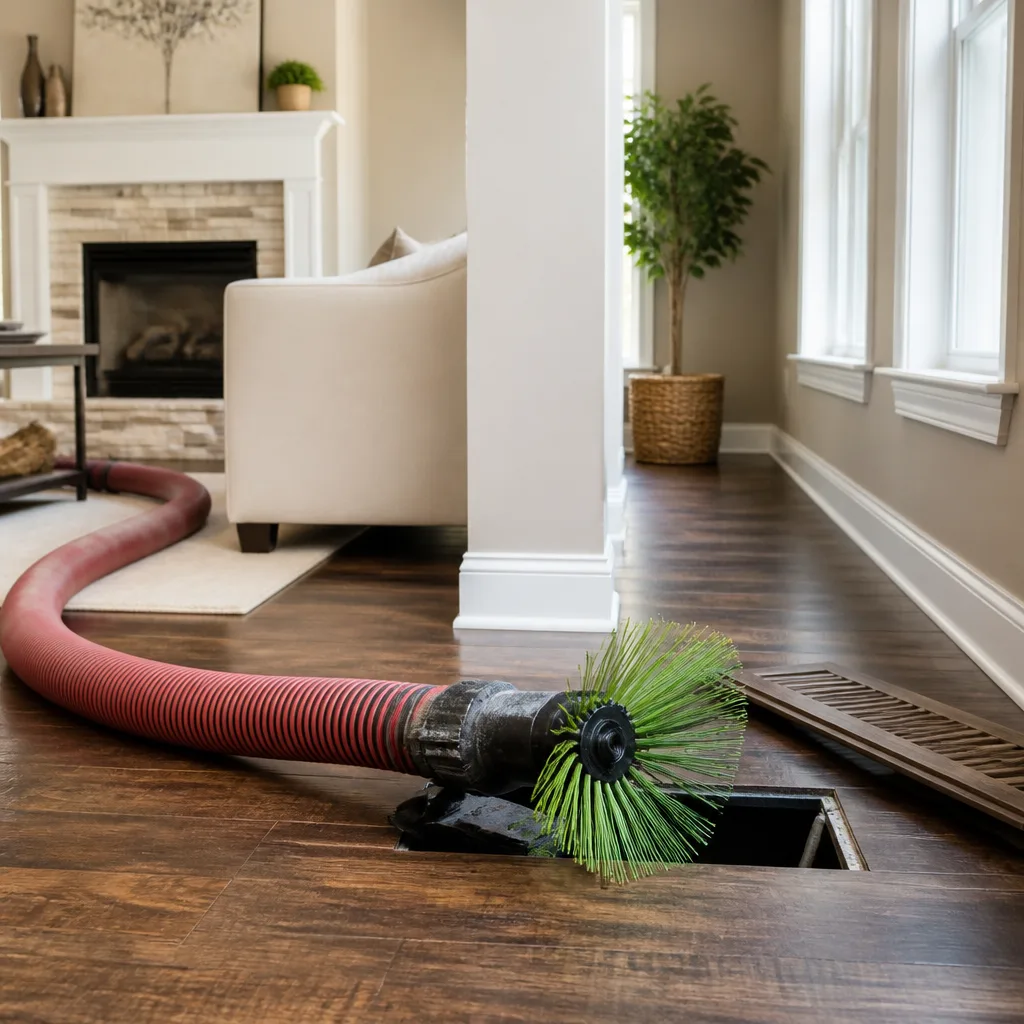
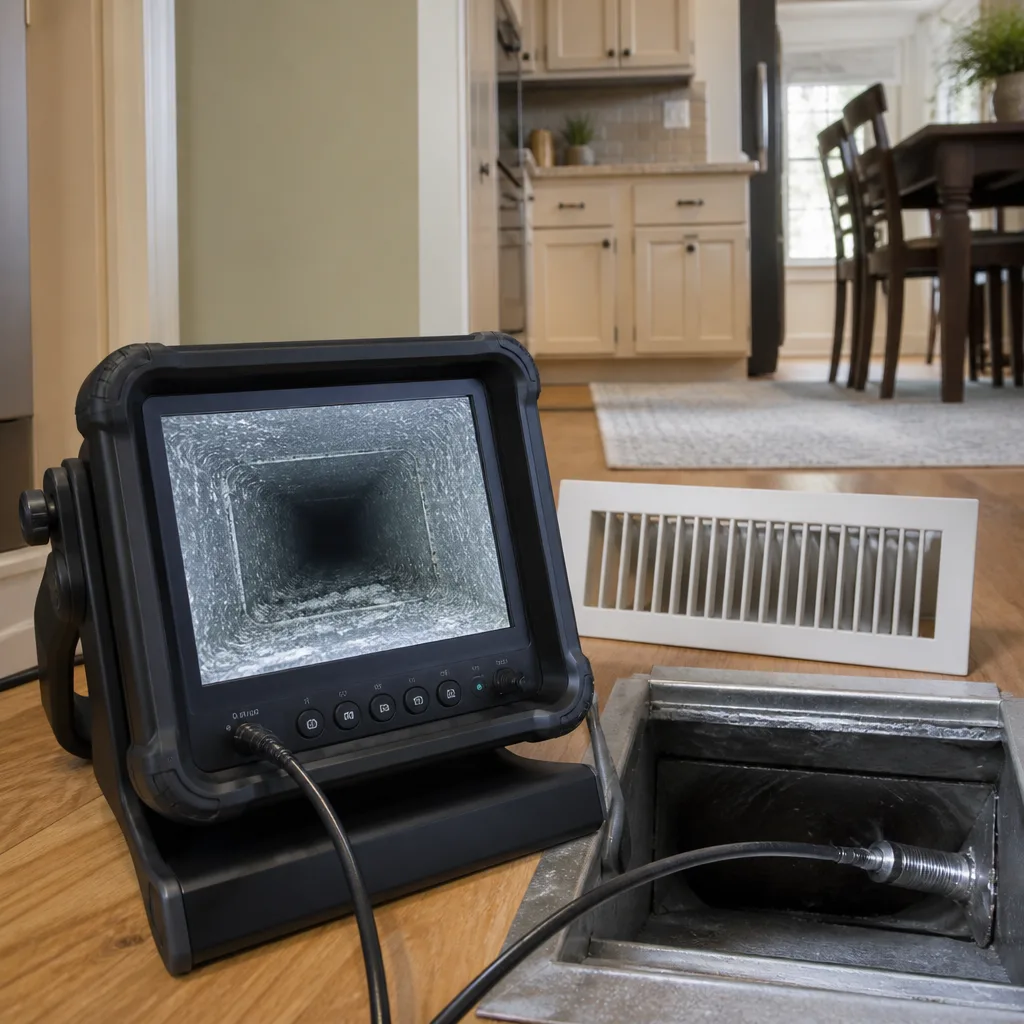
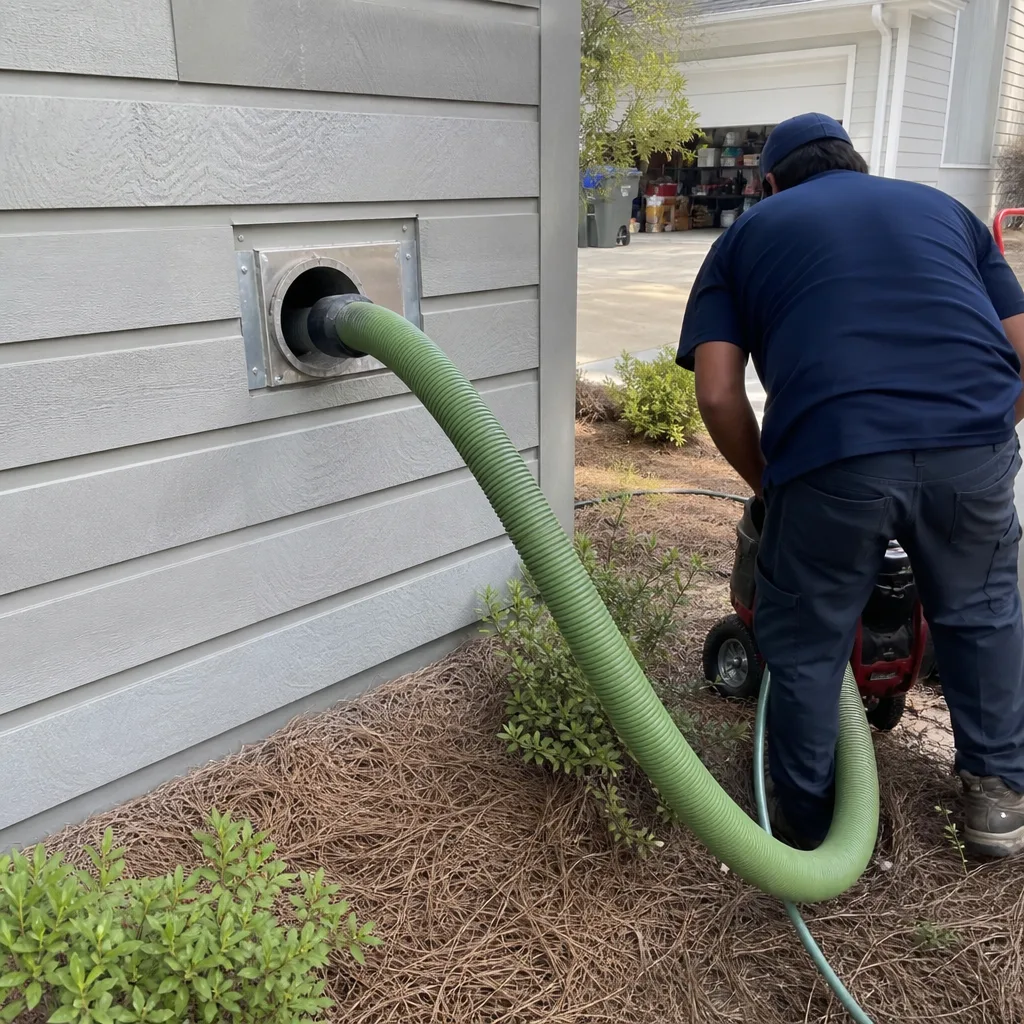
Whole-system duct and dryer vent check with before-and-after photos - you see exactly what came out of your vents
That "$99 whole-house special" is a bait ad - the real number appears once they are in your hallway, or the "clean" is a shop-vac at the register. We photograph the inside of your ducts before and after instead.
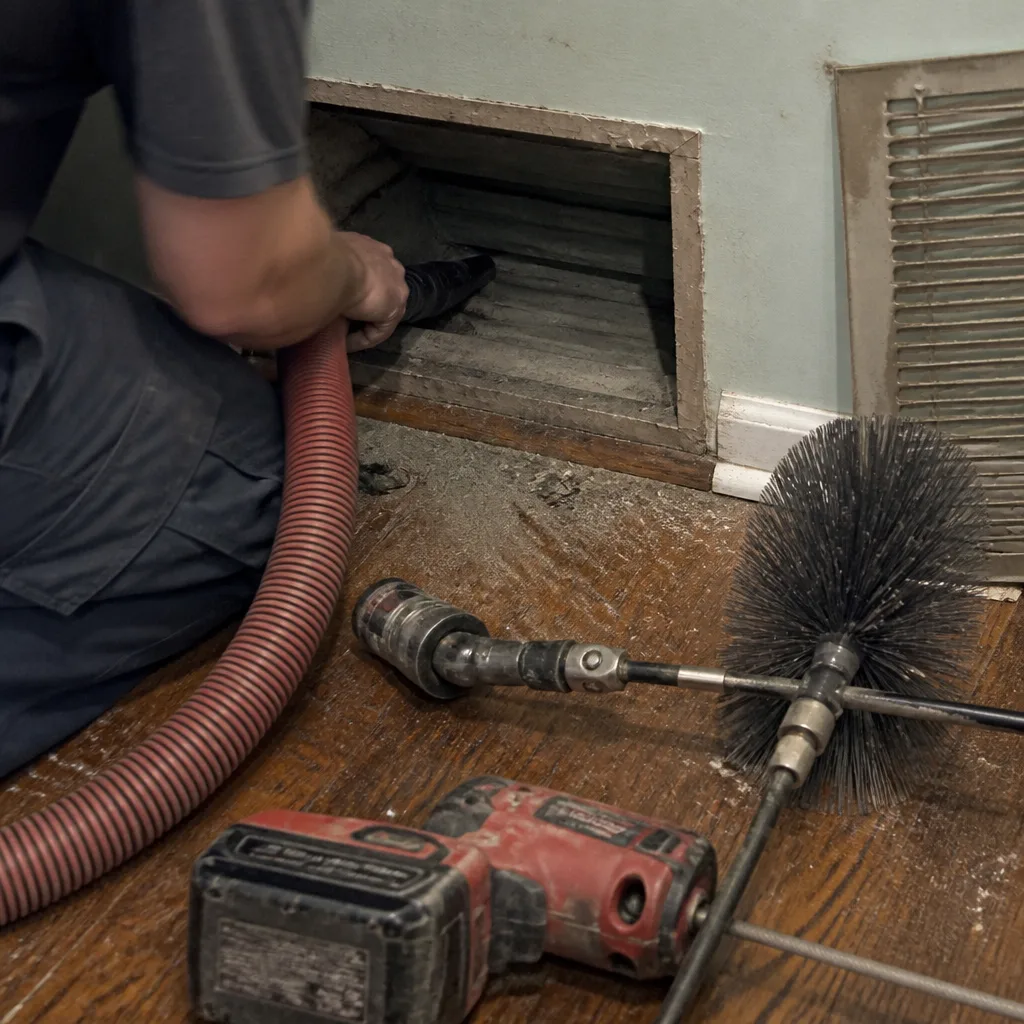 Before
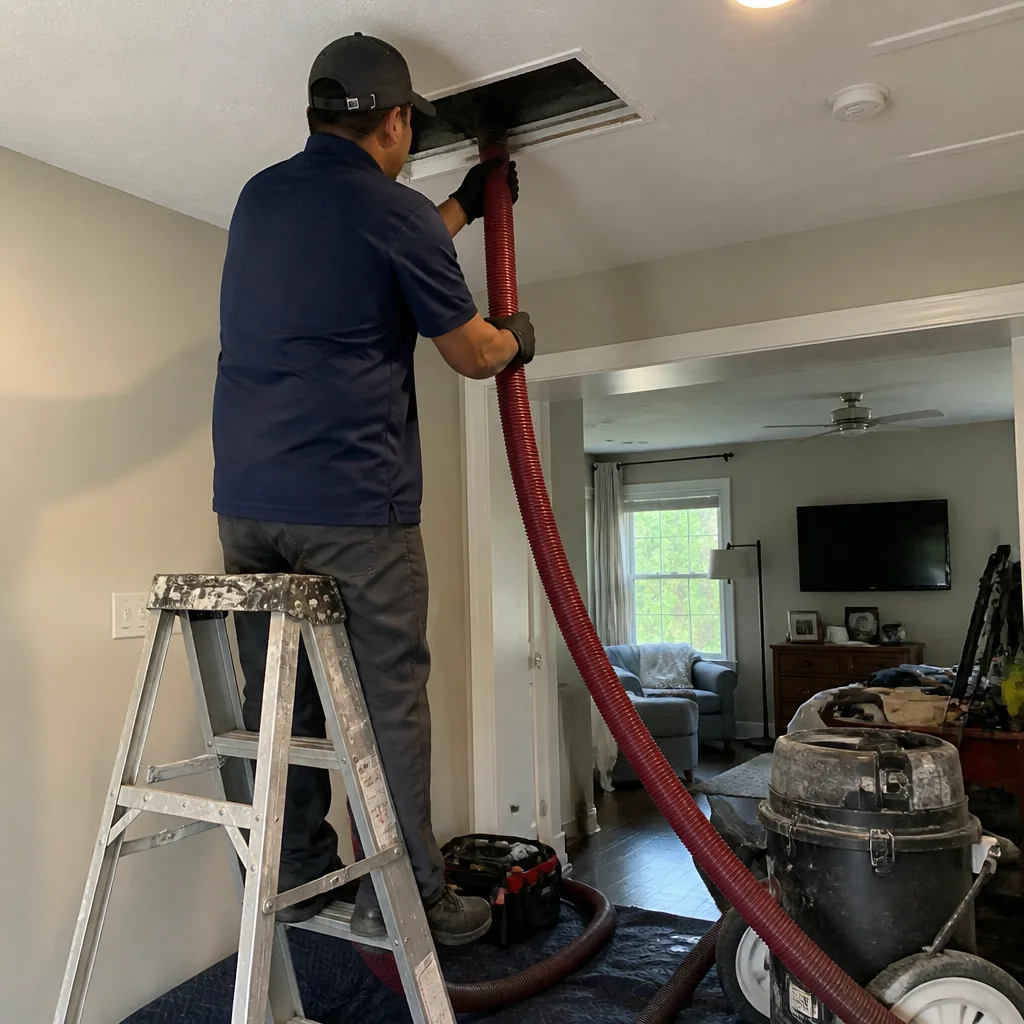 After
After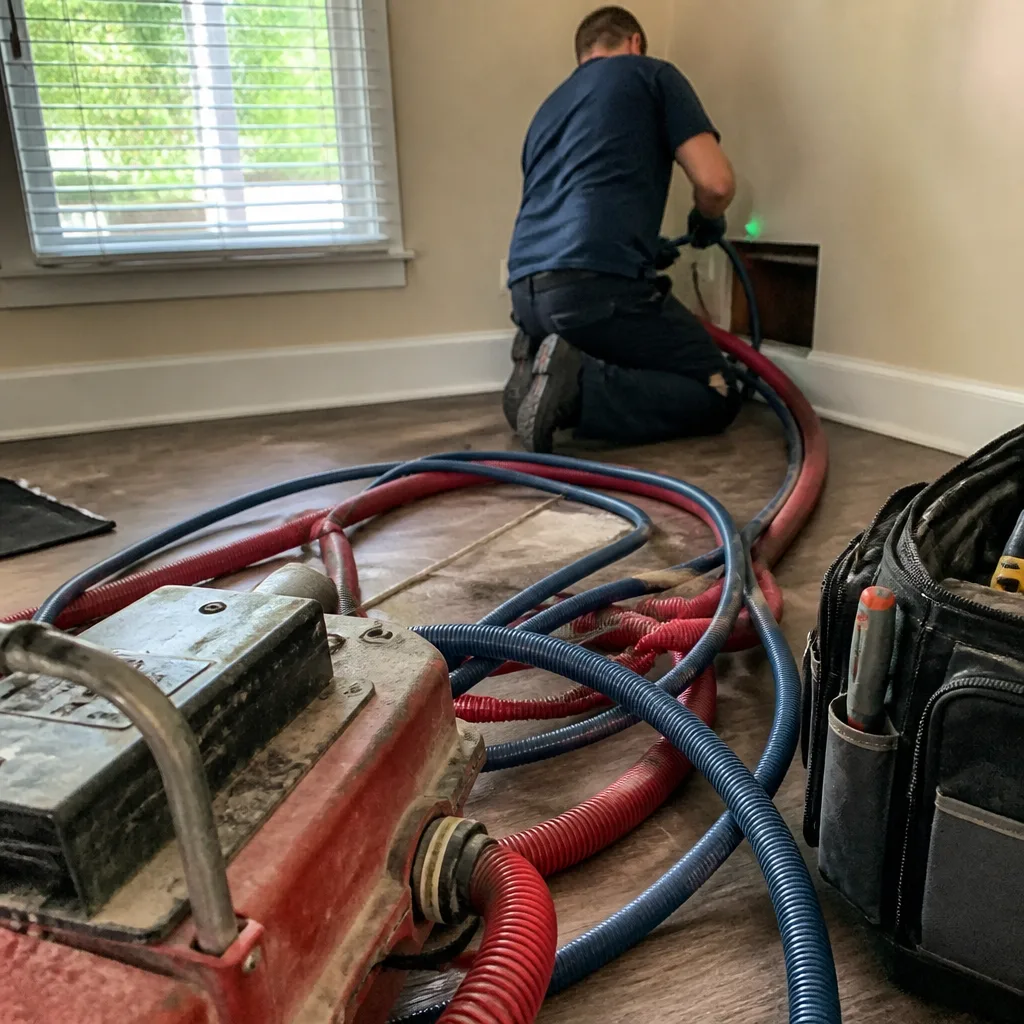 Before
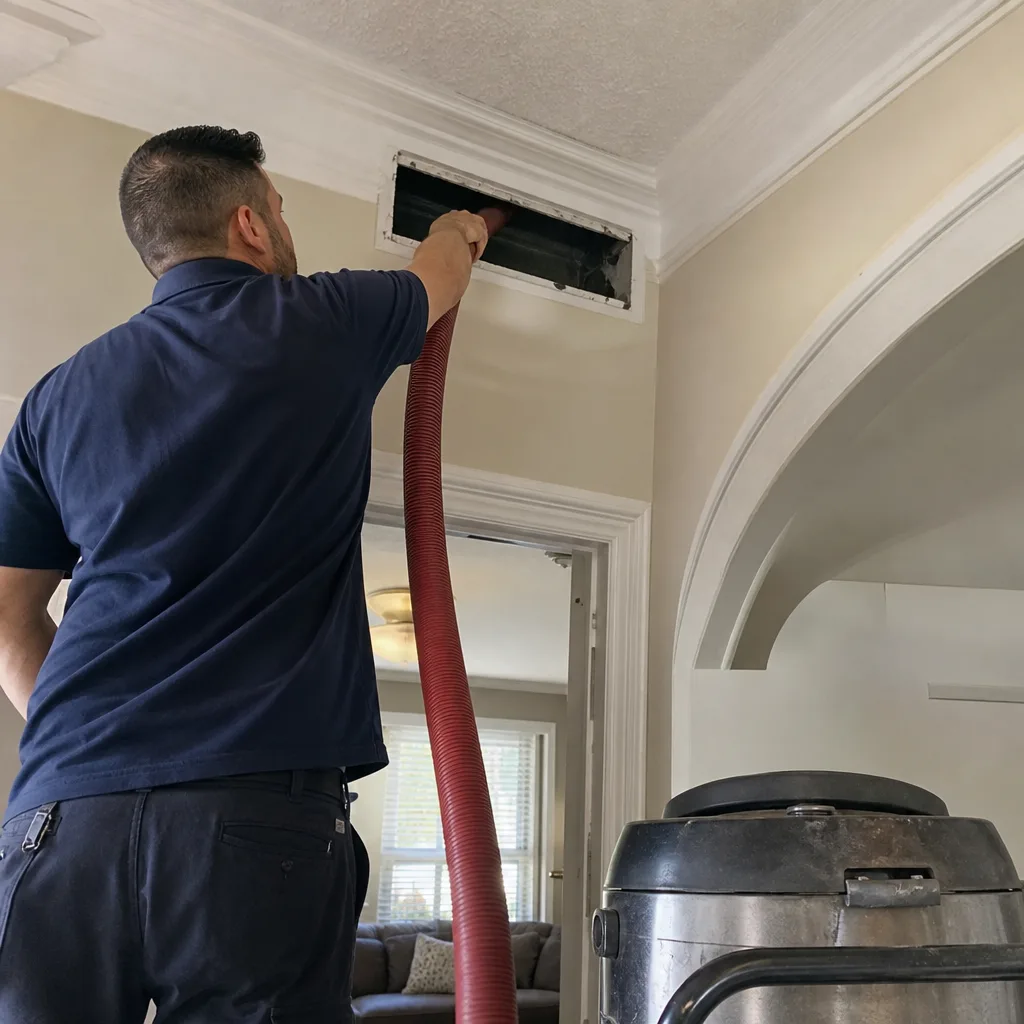 After
After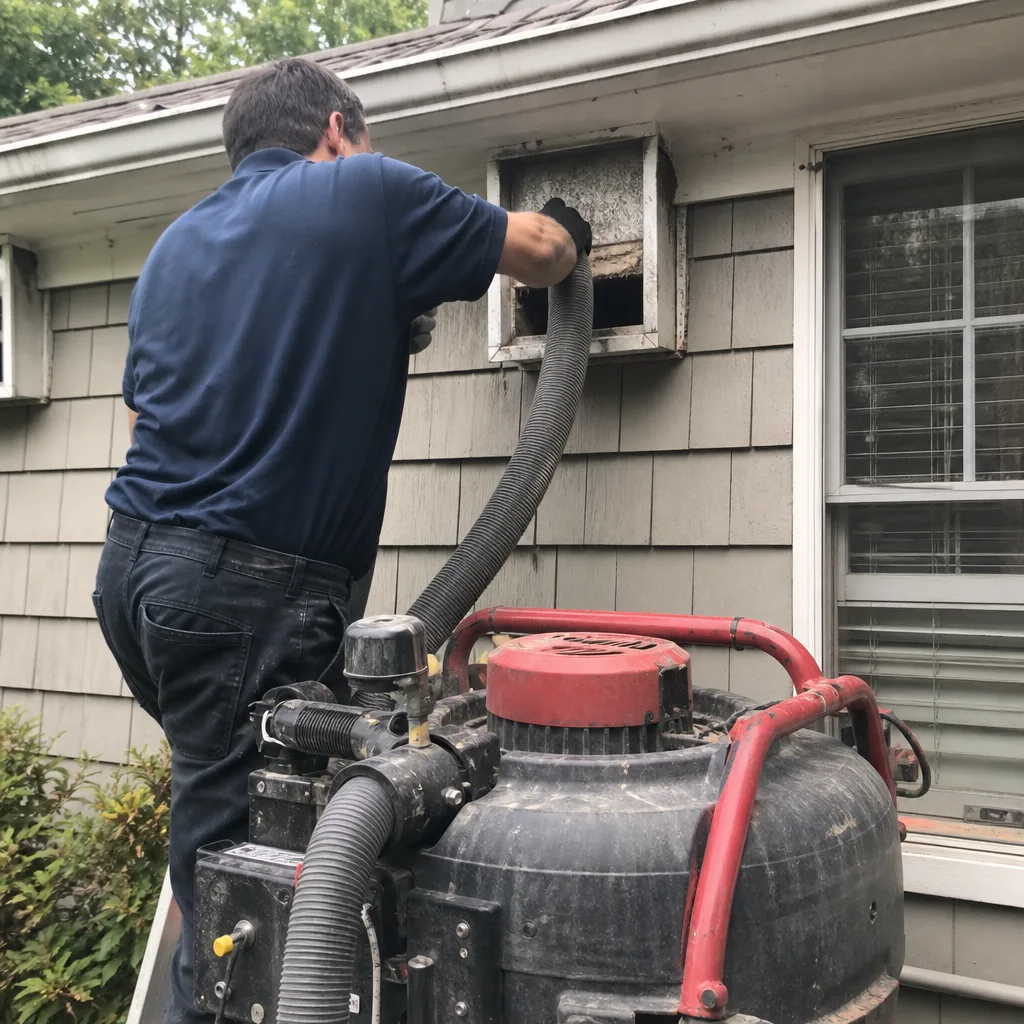 Before
 After
AfterSeasonal Air Duct Cleaning Care for Sandy Springs: Year-Round Homeowner’s Guide
Most Sandy Springs homeowners schedule duct cleaning once and hope it lasts. Here’s what we’ve documented since 2013: the worst loading period for North Atlanta duct systems isn’t summer heat - it’s the two-week spring window when oak and pine pollen coats cars overnight. A system running with a degraded filter during peak pollen can accumulate months of debris in days, and that debris doesn’t sit still. It migrates through the plenum (the main distribution box above your furnace), settles in duct runs, and gets recirculated every time the blower cycles. This guide maps Sandy Springs’ four distinct HVAC seasons to what’s actually happening inside your ductwork, month by month, so you can time maintenance for maximum durability and minimum waste.
Quick Answer
Sandy Springs homeowners should schedule Air Duct Cleaning services in early spring before peak pollen, in late fall before heating season, and after any major renovation or water intrusion event. For most homes, this means a professional cleaning every 2-3 years with seasonal filter changes and register inspections in between. Timing matters more than frequency - cleaning during pollen season or high humidity without addressing the source condition wastes money.
Table of Contents
- Why Sandy Springs Has Four HVAC Seasons, Not Two
- Spring: The Pollen Surge and Pre-Season Cleaning Window
- Summer: Humidity, Duct Sweating, and Microbial Risk
- Fall: The Critical Pre-Heating Inspection
- Winter: Recirculation Mode and Indoor Air Load
- Your Four-Season Maintenance Calendar
- What Air Duct Cleaning Costs in Sandy Springs
- Common Mistakes to Avoid
- When to Call a Professional
- Frequently Asked Questions
BeforeAfterWhy Sandy Springs Has Four HVAC Seasons, Not Two
National duct cleaning guides split the year into heating and cooling. That works for Minneapolis or Phoenix. It fails in North Georgia, where Sandy Springs sits at the intersection of three climate forces: Appalachian pollen corridors, Gulf moisture streaming north, and urban heat island effects from metro Atlanta expansion.
We’ve documented this in over 52,000 homes. The debris profile inside a Sandy Springs duct system changes measurably four times per year, and each profile demands a different response.
Spring (March-April): Pollen loading from oak, pine, and birch peaks. The camera shows yellow-green accumulation at register openings and first elbows. MERV 8 filters loaded to capacity let 40-60% of pollen mass through. Humidity rises from winter lows of 35% to 65%+, rehydrating dried particulate and making it stick to duct walls.
Summer (May-September): Sustained 80%+ humidity creates condensation on duct surfaces in unconditioned attics. We’ve photographed microbial growth on flex duct exterior insulation in Dunwoody Colony homes where attic ventilation was marginal. The debris profile shifts from dry particulate to sticky, biologically active film.
Fall (October-November): Leaf litter and mold spores peak. HVAC systems switch from cooling to heating, often without inspection. The first heating cycle disturbs three months of settled debris. Indoor air quality complaints spike in Sandy Springs during the second week of October - we’ve tracked this pattern since 2016.
Winter (December-February): Tight homes, recirculation-dominant operation, and supplemental heating sources (gas logs, space heaters) introduce combustion byproducts and ultra-fine particles. Filter loading is invisible because there’s no visible dust, but the mass accumulates.
Each season leaves a distinct signature. Cleaning at the wrong time, or cleaning without addressing the season-specific source, produces results that degrade within weeks.
Spring: The Pollen Surge and Pre-Season Cleaning Window
The Sandy Springs pollen calendar runs roughly March 10 through April 25, with peak intensity in the third week of March. Oak pollen dominates early; pine follows. The National Allergy Bureau station at Northside Hospital records daily pollen counts exceeding 2,000 grains per cubic meter during peak periods. For context: 150 grains is considered “high.”
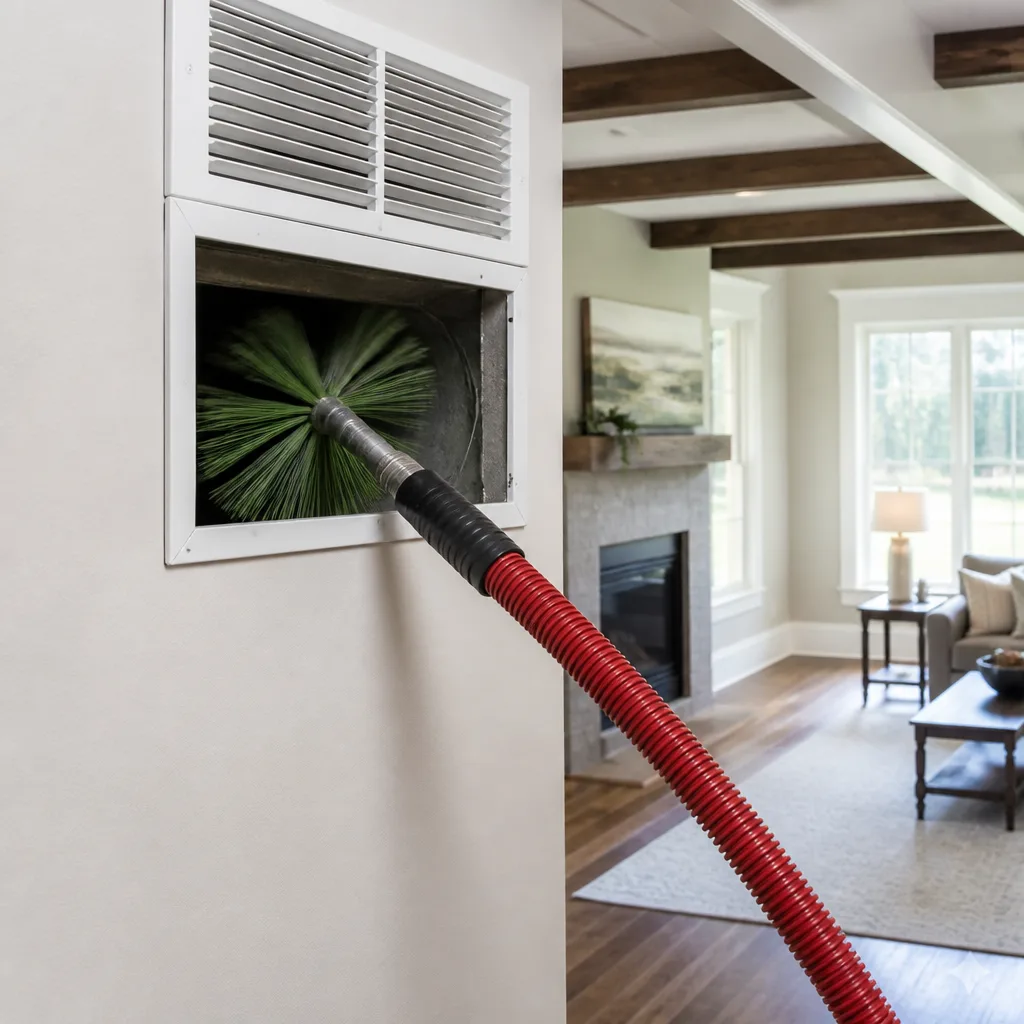
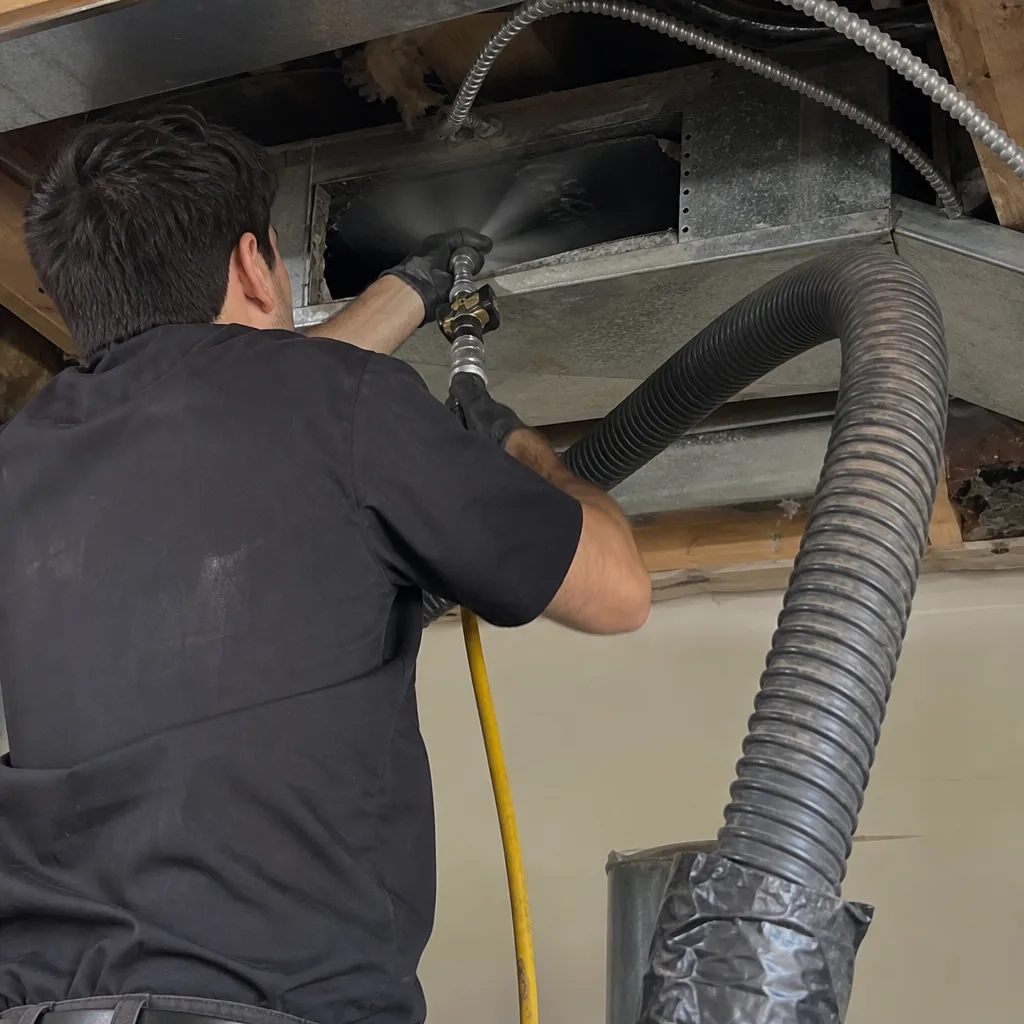
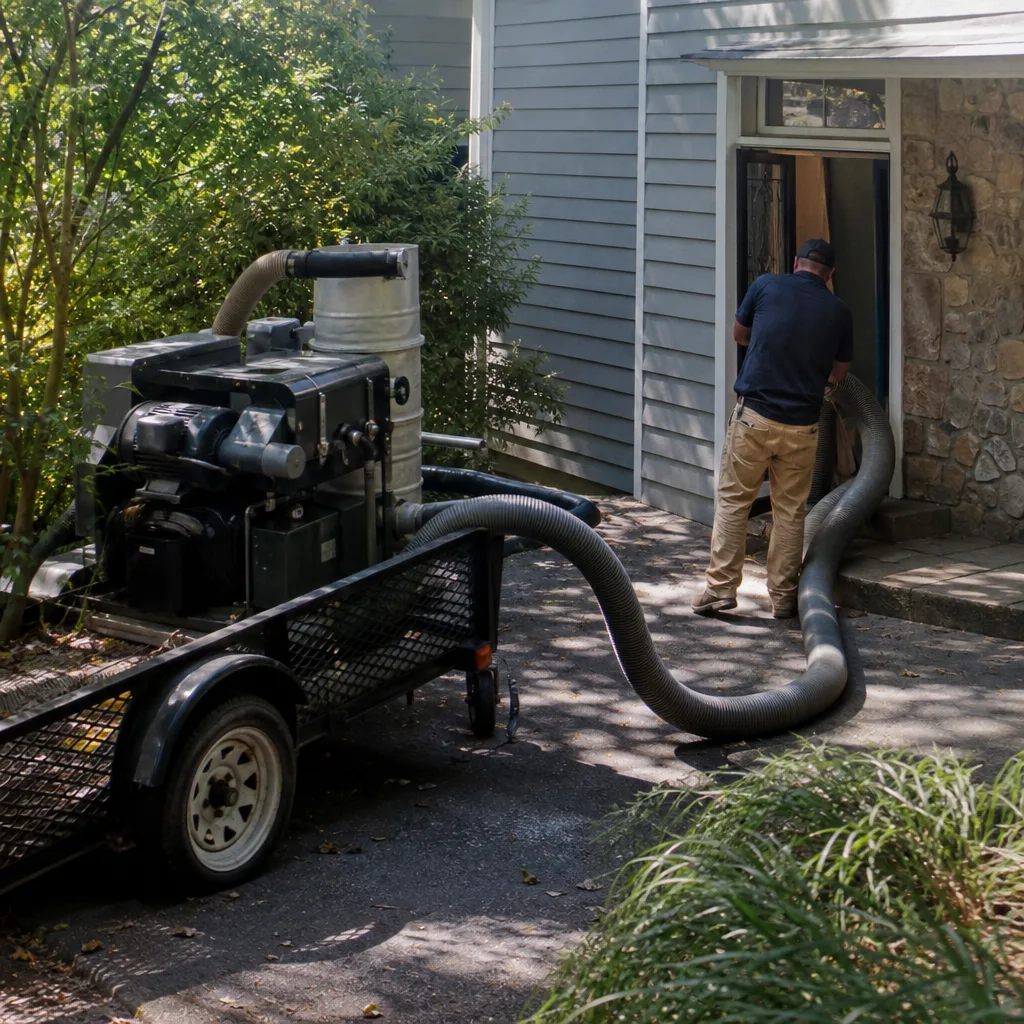
Here’s what this means inside your ducts. Pollen enters through intake vents, around filter bypass gaps, and through doors and windows during shoulder-season days when the system is off. It dries in place during low-humidity March mornings. Then April humidity rehydrates it. The result is a adherent, protein-rich film that standard vacuuming won’t remove - it requires agitation with a Rotobrush or equivalent rotary contact system, followed by negative-pressure extraction (suction applied to the entire duct network to prevent debris escape).
The cleaning window: Early March, before peak pollen, or mid-May, after pollen has settled and the first hot days have dried remaining residue. Cleaning in mid-March is the most common mistake we correct. The customer pays for service, runs the system for three weeks of peak pollen, and faces the same loading they started with.
In Riverside and Heards Ferry neighborhoods, where mature oak canopies are densest, we’ve measured 30-40% faster filter loading than in newer developments with less established tree cover. Homes near the Chattahoochee River corridor see extended pollen seasons due to microclimate effects.
What to do in spring:
- Replace filters with MERV 11 or higher rated for pollen, the week before peak season
- Inspect register seals for gaps that bypass filtration
- Schedule professional cleaning for early March or mid-May, not mid-season
- Request photo documentation of the plenum and first elbows - these show pollen loading first
CleanRun’s Air Duct Cleaning in Sandy Springs includes a written pollen-season assessment with every spring booking, noting tree canopy density and recommended filter change intervals for that specific property.
Summer: Humidity, Duct Sweating, and Microbial Risk
Sandy Springs summer design conditions per ACCA Manual J: 91°F dry bulb, 74°F wet bulb, yielding relative humidity near 50% at peak. But attic temperatures exceed 130°F, and the temperature differential between conditioned air (55°F supply) and attic surfaces creates sustained condensation on duct exteriors.
We’ve found this in homes across Sandy Springs: Morgan Falls, Spalding Drive, and the older ranch stock near Roswell Road. The pattern is consistent. Fiberglass-lined ductwork or flex duct with compromised vapor barriers develops exterior sweating. The fiberglass wicks moisture inward. The camera shows gray-green discoloration at low points where condensate collects. This isn’t “dust” - it’s active microbial colonization.
The homeowner rarely knows until odor appears or allergy symptoms spike. The smell is musty, often described as “like a basement,” and it intensifies when the system first cycles on after a setback period. By then, the biological load is established and requires more than standard cleaning.
Inspection signs to watch for:
- Water stains on ceiling drywall near supply registers
- Musty odor in the first 30 seconds of system operation
- Visible condensation on ductwork in accessible basement or crawl spaces
- Filter mold - black or green spotting on the intake side of a recently changed filter
Prevention beats remediation. Summer duct maintenance in Sandy Springs should include:
- Attic ventilation assessment - soffit and ridge vent balance, not just fan installation
- Vapor barrier inspection on flex duct runs
- Register and boot sealing to prevent humid attic air infiltration
- UV-C or photocatalytic oxidation treatment in the plenum, where standing moisture is most likely, using equipment from Abatement Technologies or equivalent
Cleaning during peak summer humidity without addressing the moisture source is temporary. We’ve documented cases where customers paid for service in July and saw microbial recurrence by September. The Haven Standard Clause 1 written pricing protocol includes moisture source identification for this reason - we won’t quote cleaning alone when the conditions guarantee rapid recontamination.
Fall: The Critical Pre-Heating Inspection
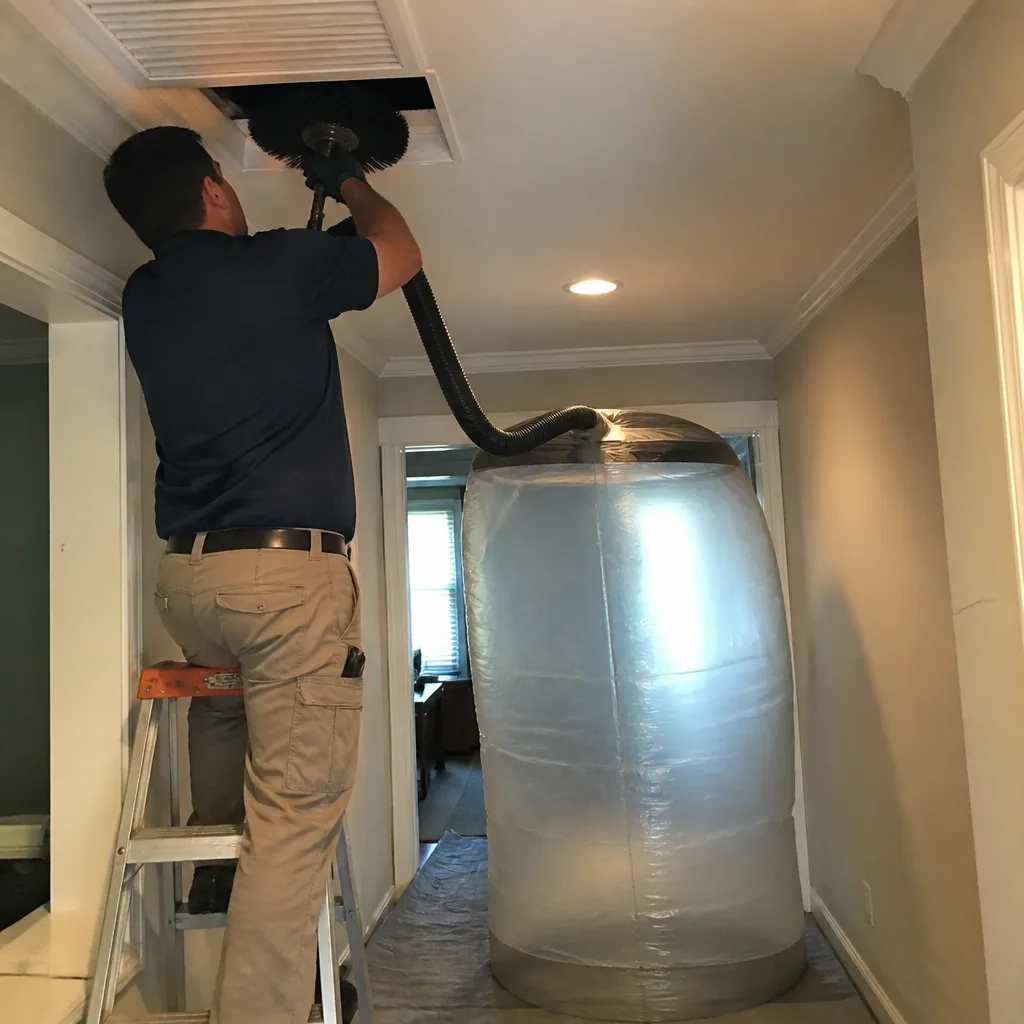
October 15 is the median date for first heating system use in Sandy Springs. Most homeowners flip the switch without inspection. This is when we see the highest rate of avoidable indoor air quality complaints.
Three months of summer cooling have deposited a specific debris profile: skin cells, pet dander, and fine particulate from outdoor air that bypassed filtration. Summer humidity has bound this material to duct walls. The first heating cycle, with its higher supply air temperature and lower velocity, disturbs this film and distributes it through the home before the filter can capture it.
The fall inspection window - mid-September to mid-October - is the most underutilized maintenance opportunity in Sandy Springs. Follow our Air Duct Cleaning Maintenance Checklist for Sandy Springs Homeowners; here’s what it should include:
- Visual inspection of the heat exchanger for summer corrosion or debris accumulation
- Filter replacement with heating-season appropriate media - lower MERV if summer used high, to prevent restricted airflow on first-cycle heat rise
- Register removal and inspection of boot connections for summer pest intrusion (rodents seek cooler ductwork in August-September)
- Duct run photography at accessible points to assess accumulation before heating season locks it in circulation
In neighborhoods like Highland Colony and Glenridge Heights, where homes were built 1985-2005 with original ductwork, fall inspection often reveals separation at flex duct connections. Summer expansion and contraction cycles stress these joints. Heating season airflow, with its thermal shock, completes the separation. The result is attic air infiltration, energy loss, and debris introduction - all invisible until the camera goes in.
CleanRun’s fall protocol includes a written pre-heating readiness report with photo documentation. If cleaning is indicated, we schedule before first heating use. If not, the customer has a dated record of duct condition for warranty and resale purposes.
Our HVAC Cleaning in Sandy Springs service integrates furnace, coil, and duct assessment as a single documented scope, which we recommend for any system over 10 years old before heating season startup.
Winter: Recirculation Mode and Indoor Air Load
Sandy Springs winter is mild by national standards - average January low of 33°F - but heating degree days accumulate. Tight, energy-efficient homes run extended recirculation cycles with minimal fresh air introduction. The indoor air load becomes self-generated: cooking particulate, pet dander, skin cells, and combustion byproducts from gas appliances.
The debris profile shifts from coarse outdoor material to fine, adhesive indoor particulate. We’ve photographed this distinction. Spring accumulation shows as visible clumps at registers. Winter accumulation is a uniform gray film, often 1-2 millimeters thick, that coats the entire duct perimeter. It doesn’t restrict airflow measurably, but it increases pressure drop and provides substrate for spring microbial growth when humidity returns.
Winter maintenance is minimal but specific:
- Filter inspection every 30 days - recirculation loads filters faster than mixed-mode operation
- Humidifier maintenance if equipped - standing water in bypass humidifiers is a documented source of duct contamination
- Register vacuuming with HEPA attachment - surface cleaning only, not deep duct access
- Carbon monoxide detector verification - heating season safety baseline, not duct-specific but system-relevant
We do not recommend winter duct cleaning except for specific events: post-renovation, post-pest remediation, or water intrusion. The low humidity prevents effective debris suspension during agitation, and the heating load makes extended system downtime undesirable. If winter cleaning is necessary, we schedule during predicted warm spells and use heated auxiliary equipment from Nikro to maintain effective working temperatures.
Homes with gas logs or vent-free heaters deserve special mention. These introduce significant moisture and combustion particulate. We’ve measured elevated carbon monoxide in duct systems where vent-free heaters operated without adequate combustion air. This isn’t a cleaning issue - it’s a safety issue requiring HVAC contractor intervention. CleanRun documents and reports; we do not clean over active combustion hazards.
Your Four-Season Maintenance Calendar
This calendar integrates CleanRun’s documented experience in Sandy Springs with North Atlanta climate patterns. Tasks marked with * indicate professional service; others are homeowner maintenance.
March (Early)
- * Schedule duct cleaning if not done since previous spring - before pollen peak
- Install fresh MERV 11+ filters
- Inspect outdoor condenser for winter debris accumulation
April-May
- Monitor filter loading weekly during pollen peak
- Inspect registers for visible pollen accumulation
- * Schedule mid-May cleaning if spring service was deferred
June-July
- Check attic access for duct sweating indicators
- Verify condensate drain flow from air handler
- * Schedule moisture assessment if musty odor or staining appears
August-September
- Inspect accessible ductwork for pest intrusion signs
- Replace filters before fall transition
- * Schedule pre-heating inspection and cleaning if indicated
October (Mid)
- * Complete any indicated cleaning before first heating use
- Verify heat exchanger and combustion safety
- Document duct condition with photo record for baseline
November-February
- 30-day filter inspection cycle
- Humidifier maintenance if equipped
- Register surface cleaning only - defer deep cleaning to spring
This calendar assumes a typical Sandy Springs single-family home with central forced-air HVAC, occupied full-time, with no indoor smoking and moderate pet presence. Adjust frequency for multiple pets, recent renovation, or respiratory sensitivity in occupants.
What Air Duct Cleaning Costs in Sandy Springs
Honest pricing is Haven Standard Clause 1. See our Air Duct Cleaning Cost Breakdown: The Sandy Springs Homeowner’s Reference for 2026 for full details; we publish ranges because “call for a quote” wastes time and invites bait-and-switch. Every CleanRun job receives a written price before work starts - no exceptions.
Sandy Springs whole-system air duct cleaning, based on homes we’ve serviced from 2013-2025:
| Home Size / System Type | Typical Range | What’s Included |
|---|---|---|
| Condo/townhome, 1-2 systems | $320 – $480 | All duct runs, plenum, registers, before/after photo record |
| Single-family, 1 system, under 2,500 sq ft | $420 – $620 | All duct runs, plenum, registers, before/after photo record |
| Single-family, 2 systems, 2,500-4,000 sq ft | $680 – $950 | All duct runs, plenums, registers, before/after photo record |
| Large home or complex layout, 2+ systems | $950 – $1,400 | Custom scope with written line items, photo record |
Add-on services, priced separately and in writing:
- Dryer vent cleaning: $120 – $220 (recommended annually; lint accumulation is independent of duct cleaning cycle)
- Coil and air handler cleaning: $180 – $340
- Duct repair and sealing: $85 – $150 per run, depending on accessibility
- UV-C or photocatalytic treatment: $280 – $450 per air handler
Why some Sandy Springs quotes are cheaper: per-vent pricing that excludes the plenum, shop-vacuum surface cleaning without negative-pressure extraction, or “whole house” coupons that cover only the first 10 feet of each run. We document the full system. The photo record shows the difference.
CleanRun’s Dryer Vent Cleaning in Sandy Springs is available as standalone service or bundled with duct cleaning, with written pricing for either option.
Common Mistakes to Avoid
- Cleaning during peak pollen season. Mid-March service in Sandy Springs produces clean ducts that are reloaded within two weeks. The customer pays twice for one result. Schedule before or after the surge.
- Ignoring attic ductwork condition. Flex duct with degraded vapor barriers creates a humidity reservoir that defeats cleaning results. We photograph and report; some customers decline repair and face recurrence. The documentation protects both parties.
- Using the cheapest filter that fits. Fiberglass panel filters (MERV 1-4) remove less than 20% of pollen mass. The “fits” standard is nominal - actual dimensions vary by 1/4 inch, creating bypass gaps. We measure and recommend specific filter models per system.
- Assuming new construction is clean. Sandy Springs building boom 2015-2022 produced homes with construction debris in ducts that wasn’t removed by builder “cleanout.” We’ve photographed drywall dust, wood shavings, and fastener debris in homes under two years old. Independent verification matters.
- Treating duct cleaning as a one-time event. Without seasonal maintenance, debris reaccumulates on a predictable curve. The 2-3 year cleaning interval assumes filter discipline and source control. Neglect either, and annual service becomes necessary.
- Accepting verbal estimates. The $79 coupon that becomes $600 on arrival is a documented pattern in North Atlanta. Haven Standard Clause 1 requires written pricing before work starts. No written price, no work - this protects the customer and the technician.
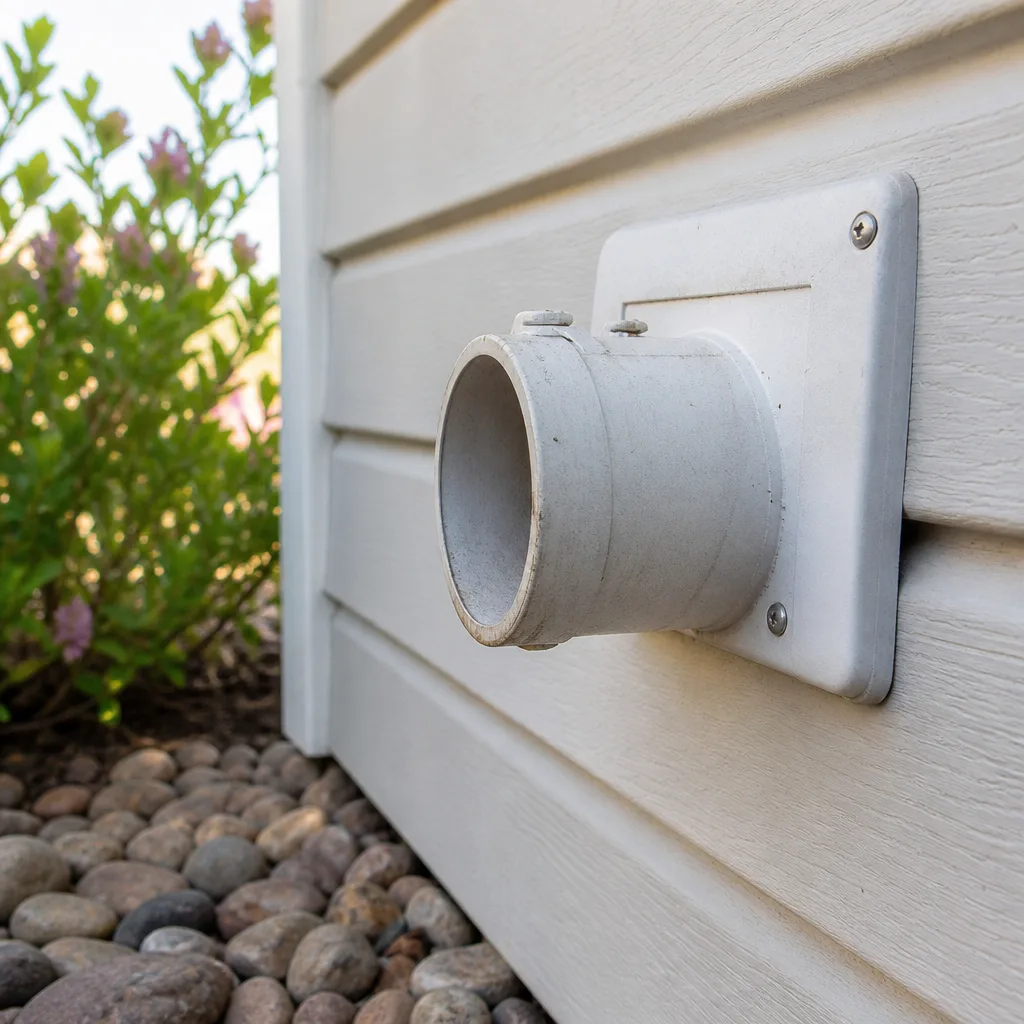
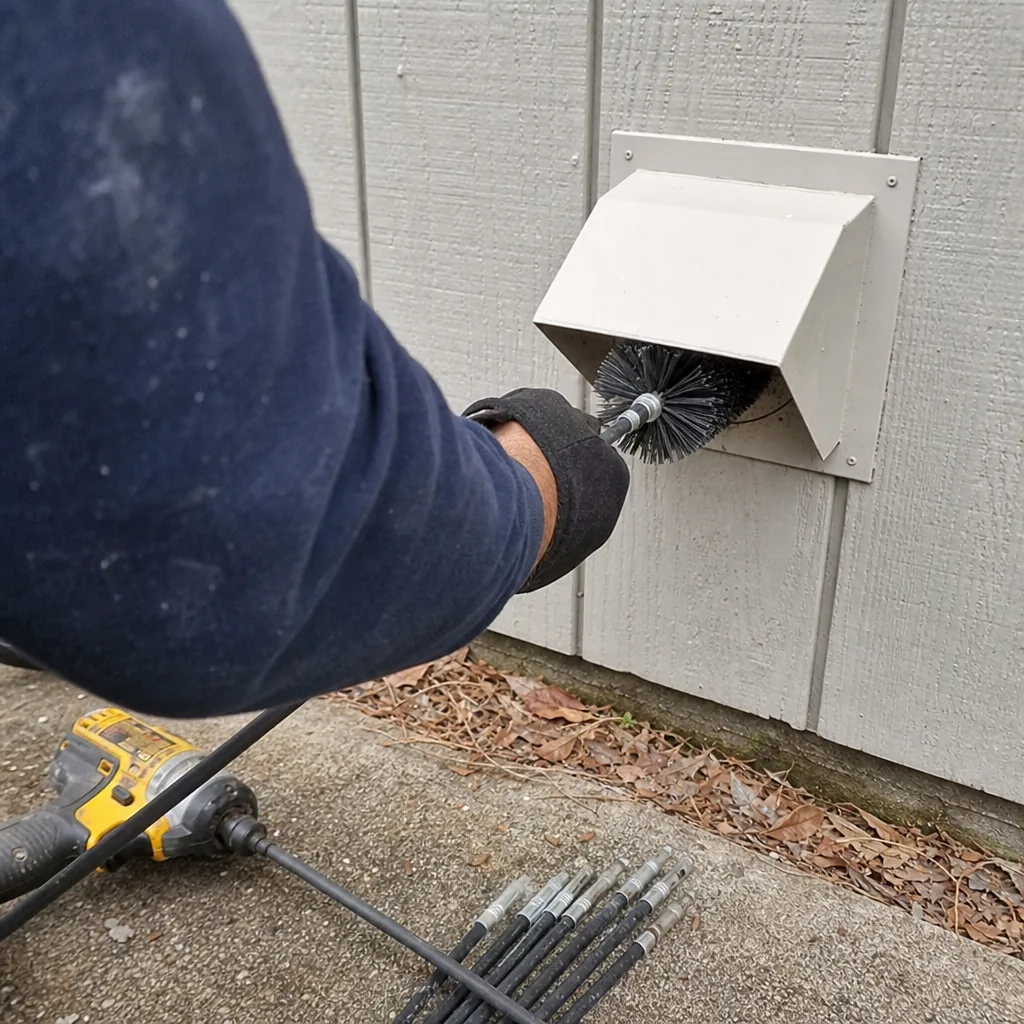
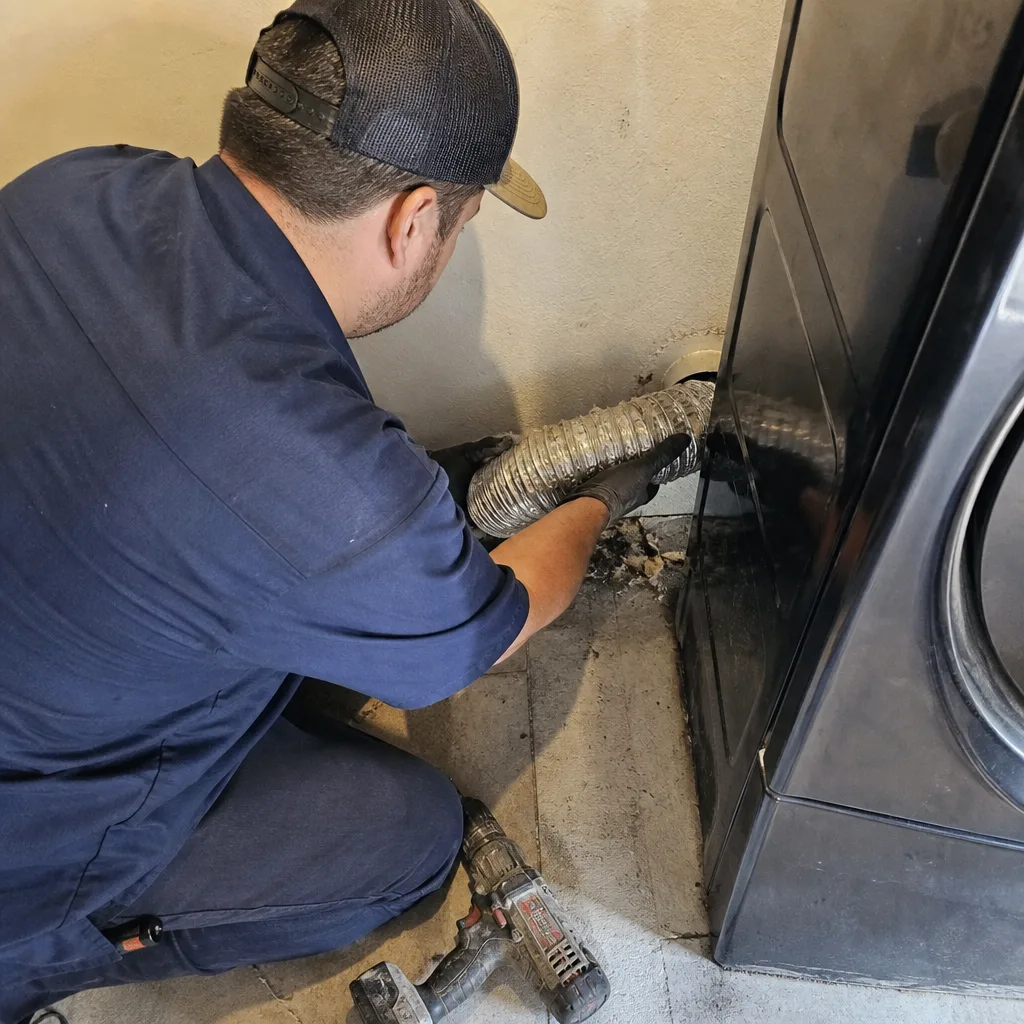
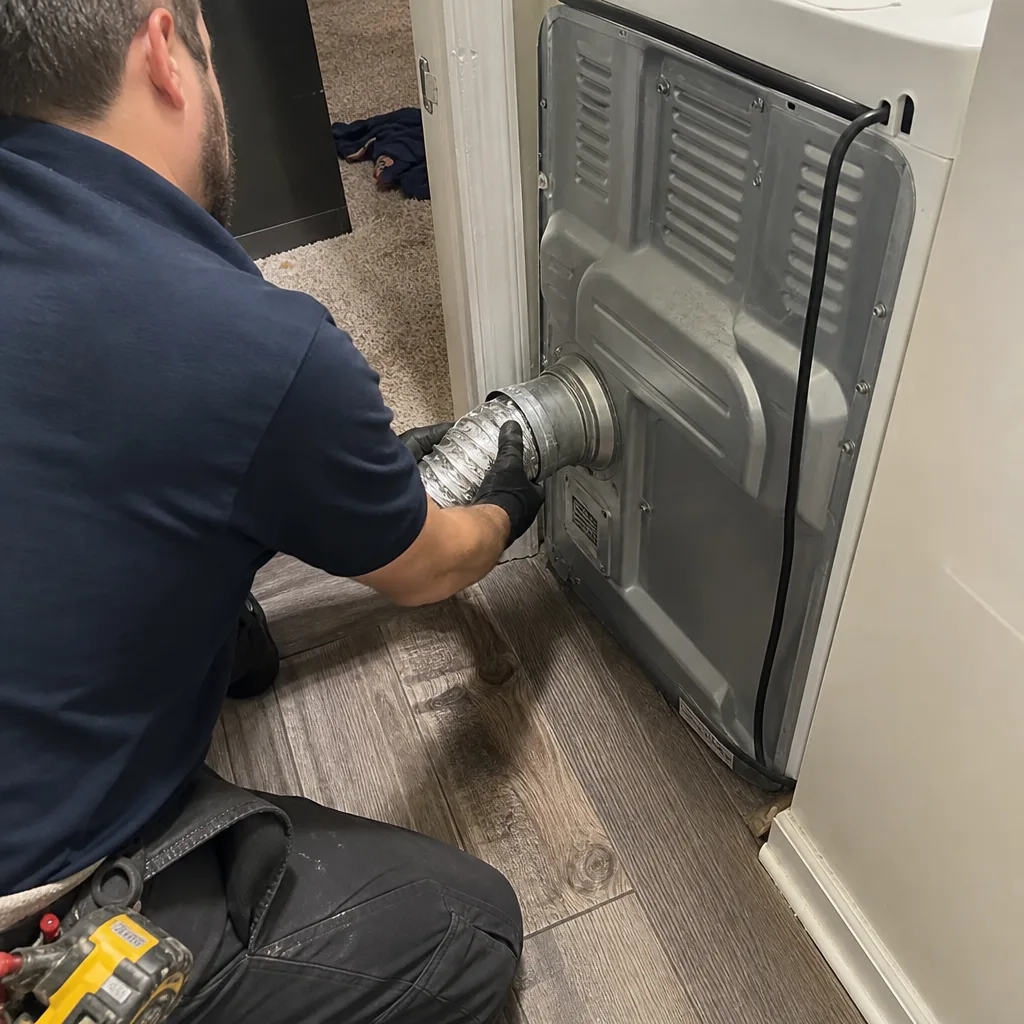
- Overlooking the dryer vent. In Sandy Springs’ humid summers, restricted dryer vents create back-pressure that forces lint into ductwork through shared wall cavities. Annual dryer vent cleaning prevents this cross-contamination.
When to Call a Professional
Call for documented assessment when you observe visible debris at registers, sustained musty odor, uneven heating or cooling distribution, or post-renovation dust that persists beyond normal settling. After water intrusion - roof leak, condensate overflow, or foundation seepage - duct inspection should occur within 72 hours to prevent microbial establishment.
CleanRun Air Duct Cleaning Sandy Springs offers free estimates in Sandy Springs - call (678) 904-9744. Every estimate includes a written scope and price before any commitment. We also provide a Free Second Opinion on any competitor’s written estimate, documented side-by-side under Haven Standard Clause 1.
All technicians are background-checked and uniformed under Haven Standard Clause 3: Verified Crews. You’ll receive technician name and photo before arrival, and every job concludes with a Documented Photo Record of every duct run, delivered as part of your standard job record.
Frequently Asked Questions
Whole-system cleaning for a typical Sandy Springs single-family home runs $420-$620 for one system, $680-$950 for two systems, with written pricing delivered before work starts. Condos and townhomes range $320-$480. Call (678) 904-9744 for an exact quote - estimates are free and include a written scope.
Low quotes typically exclude the plenum, limit coverage to 10 feet per duct run, or use shop-vacuum surface cleaning without negative-pressure extraction. The industry standard we follow since 2013 photographs every run before and after, with full system coverage. Ask any competitor: will they show you the inside of every duct run, in writing, before you pay?
CleanRun provides a Documented Photo Record on every visit - inside every duct run, before and after, delivered as part of your standard job record. This practice has been in place since our first job in 2013. No photos, no verification; we don’t consider the job complete without documentation.
Most Sandy Springs homes need professional cleaning every 2-3 years, with seasonal filter changes and register inspections between services. Homes with multiple pets, recent renovation, or dense tree canopy (Riverside, Heards Ferry areas) may need annual service. The 365-Day Done Right Promise covers any concern about result durability.
Surface register cleaning with a HEPA vacuum is appropriate homeowner maintenance. For deeper guidance, explore our more guides & resources. Deep duct cleaning requires rotary agitation equipment, negative-pressure extraction systems, and access tools that aren’t available for consumer rental. More critically, ductwork in unconditioned spaces may contain degraded materials or pest evidence that requires professional assessment. We document and report; DIY can’t.
Yes, specifically because of the pollen surge and summer humidity combination. The spring pollen load is among the highest in the Southeast, and the humidity window for microbial growth extends May through September. These aren’t generic climate claims - they’re documented in our 52,000-home record and visible in every photo record we deliver.
The Bottom Line
Sandy Springs’ four-season HVAC reality demands timed maintenance, not generic annual service. Clean before pollen, inspect before heating, monitor humidity in summer, and maintain filters through winter. The cost of mistimed cleaning isn’t just the service fee - it’s the rapid recontamination that follows. Documented evidence, written pricing, and seasonal specificity separate effective maintenance from marketing noise. Since 2013, CleanRun has built its record on showing customers what their ducts actually contain, then delivering a written result they can verify.
Call (678) 904-9744 for a free estimate with written pricing, or bring any competitor’s written quote for a Free Second Opinion under Haven Standard Clause 1. We’ll put our number next to theirs, document what we find, and let the evidence decide.
Written by Tomas Reyes, Owner at CleanRun Air Duct Cleaning Sandy Springs, serving Sandy Springs since 2013.